
- - -
- hours mins seconds
to get your checks by
Thursday, Nov. 12th

 0
You have no items in your shopping cart.
Forged Endorsement on a Business Check: Who Carries the Loss
Last updated: November 10, 2026
A forged endorsement is the quietest form of check fraud. The front of the item is perfect, the amount is right, your account is debited for exactly what you intended to pay, and the only thing wrong is that the money went to the wrong person. Nobody notices until the supplier asks where their payment is.
Quick Summary
Loss from a forged endorsement is allocated by a short set of rules rather than by who feels most wronged. The payee who never received the money usually holds the claim, the issuer generally does not, and the answer changes completely when the person who signed was an employee entrusted with responsibility for the item.
- The claim is conversion, and the code applies that law to instruments.
- The issuer cannot bring it, nor can a payee who never took delivery.
- Liability is presumed to be the amount payable on the item.
- An entrusted employee's forgery is effective, which moves the loss to the employer.
- Access alone is not responsibility, and that distinction decides cases.
- Comparative fault applies where a bank failed to use ordinary care.
Here is how the position usually falls out depending on who did it.
| Who signed it | Usual starting position | What shifts it |
|---|---|---|
| A stranger who stole the mail | The payee claims against the bank that took it | Your own lack of ordinary care, if it contributed |
| Your employee with responsibility | The endorsement is treated as effective | A bank that failed to use ordinary care |
| Your employee with access only | The entrustment rule does not apply | What that person was actually authorized to do |
| An outsourced bookkeeper | Treated as an employee for this rule | The scope of responsibility you gave them |
Treat this as background on payment documents rather than as advice. The outcome of any real loss turns on the facts and on how your state enacted the commercial code, which makes your attorney the right person to ask.
Most of these items are intercepted in the mail. Business checks can be printed on stock designed to resist tampering before that happens.
What this guide covers
- What is a forged endorsement?
- Who can bring the claim?
- What happens when an employee did it?
- Can the bank share the loss?
- What evidence do you need?
- How quickly should you report it?
- How do you make it harder?
What is a forged endorsement?
A forged endorsement is a signature on the back of a check made by someone with no authority to sign for the payee. It is used to deposit or cash an item that belonged to another party. A forged signature on the front is a separate problem with its own rules.
The practical difficulty is that nothing looks wrong from your side. Your account is debited for the amount you authorized, against a check number you issued. The reconciliation balances perfectly while the money sits in somebody else's account.
How does it usually come to light?
- A supplier chases a payment you believe you already made.
- A statement query turns up an endorsement nobody recognizes.
- A second payment is requested, and the first one cannot be traced to the payee.
- An employee leaves and the pattern stops without explanation.
Who can bring the claim?
Usually the payee who should have been paid. The Uniform Commercial Code says the law applicable to conversion of personal property applies to instruments. An instrument is converted where it is taken by transfer other than negotiation from a person not entitled to enforce it, or where a bank makes or obtains payment for such a person.
Two groups are shut out by name. The action may not be brought by the issuer or acceptor of the instrument, nor by a payee or indorsee who did not receive delivery of the instrument, directly or through an agent or co-payee.
That second exclusion surprises people. A payee whose check was stolen in the mail before it ever arrived may sit outside the conversion route. The practical answer is often a replacement payment from you, with the claim pursued further up the chain.
How much is recoverable?
The code presumes the measure of liability to be the amount payable on the instrument, capped at the claimant's interest in it. There is one carve out. A representative other than a depositary bank, acting in good faith, is not liable beyond any proceeds it still holds.

The issue record is what proves what you intended to pay. See blank checks on the middle for stock with two record areas.
What happens when an employee did it?
The answer turns over. Where an employer entrusted an employee with responsibility for an instrument and that employee makes a fraudulent indorsement, the code says the indorsement is effective as the indorsement of the person to whom the instrument is payable.
That one sentence is why internal fraud so often lands with the employer rather than the bank. The law treats the employer as the party that was best placed to prevent it, because the employer chose who to trust.
What counts as responsibility?
Authority to sign or endorse instruments on behalf of the employer, and similar duties over them. The code draws the line clearly: authority that merely allows an employee to have access to instruments is not responsibility.
- A payables supervisor who prepares and endorses items has responsibility.
- A clerk who opens the post has access, which is a different thing.
- An outsourced bookkeeper is included, since the definition covers an independent contractor and an employee of one.
- Job titles do not decide it, the duties actually given do.
Our guide to check signing policy covers writing those duties down, which is the document that answers this question later.
Can the bank share the loss?
Yes, and the test is ordinary care. The same rule allows a claim against a payor or taker who failed to exercise ordinary care in paying or taking the instrument. The failure has to have substantially contributed to the loss, and recovery runs only to the extent it contributed.
The wider negligence rule works the same way in reverse. A person whose own failure to exercise ordinary care substantially contributes to a forged signature is precluded from asserting it against someone who paid in good faith. Where both sides failed, the loss is allocated between them.
Expect a split rather than a winner. These cases rarely end with one party carrying everything, and the records each side can produce decide the proportions.
What evidence do you need?
Everything that shows what you issued, where it went and who signed the back. Ask for the images early. The useful one is the reverse of the item, and most businesses only ever look at the front.
- The register entry showing the number, date, payee and amount as issued.
- The stub or voucher copy recording what the payment was for.
- Front and back images requested from your bank in writing.
- Proof of mailing or the handover record if it was delivered by hand.
- The payee's statement confirming they never received or banked it.
- Your reporting dates, since promptness is part of every one of these rules.
The first of those is the document that carries the most weight, and a check register is where it lives.
How do you make it harder?
By shortening the time an item spends outside your control. Then by splitting the duties that make an internal forgery possible. Neither step costs much, and both are easier to arrange than to argue about afterwards.
- Seal payments individually so nothing identifiable shows through the envelope.
- Keep the preparer, the signer and the reconciler apart, even in a small team.
- Post from a collection box rather than an unattended outgoing tray.
- Reconcile weekly, because the deadlines in these rules reward speed.
- Ask your bank about payee name matching on the items you send out.
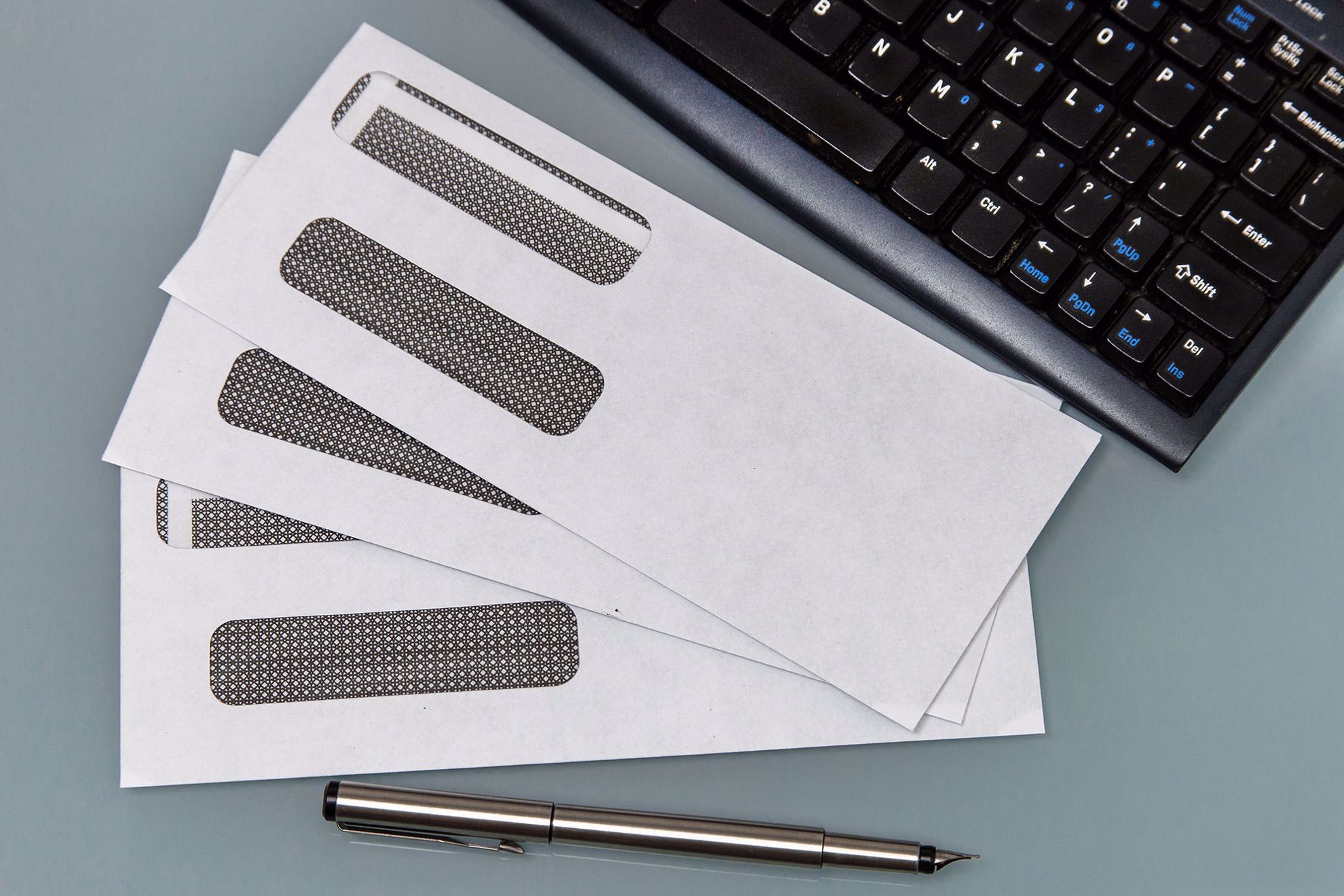
See double window self seal envelopes for the format that shows nothing but the addresses.
How quickly should you report it?
The same week you find it. Every rule in this area rewards promptness, and a business that waited is the easiest one to blame.
- Tell your bank in writing, on the day, with the item number and amount.
- Ask for the front and back images in the same message.
- Tell the payee and agree how the real payment will be made.
- Review the whole period, not just the one item you found.
- Keep every date, because the record of when you acted is part of your case.
One item is rarely alone. Where the signature came from inside the business, the pattern usually runs back further than the payment that exposed it, so the review matters more than the single claim.
Related reading
- Check washing covers the physical attack that precedes many of these.
- Check signing policy covers the duties the entrustment rule turns on.
- Check register covers the issue record you will be asked for.
- High security business checks covers tamper resistant stock.
What to do next
Write down who in your business may endorse an item on the company's behalf. Check that the list does not include anyone who also reconciles the account. That single page is the difference between the entrustment rule working for you and against you.
Then look at how payments leave the building. Business checks are printed to your layout, and high security business checks make interception less rewarding.
About the Author
Of everything customers ring us about, this is the hardest one for them to say out loud, because it usually involves somebody they trusted. There is no comfortable version of that conversation. The businesses that come through it best are the ones that kept good records before they had any reason to.
Conversion, entrustment and ordinary care as described above come from the commercial code provisions on negotiable instruments, as enacted in your own state. A loss that has already happened belongs with your bank and your attorney, not with a web page.