
- - -
- hours mins seconds
to get your checks by
Thursday, Nov. 12th

 0
You have no items in your shopping cart.
Blog
Last updated: November 10, 2026
Of all the payments a landlord makes, this is the one most likely to end up in front of somebody else. It goes to a person who has just left, often after a disagreement about the condition of a carpet, and it carries a deadline that starts running the moment they hand back the keys.
Quick Summary
A security deposit refund check is a deadline payment with paperwork attached. The deadline, the itemized statement and the supporting documents are set by state law. Taking California as a worked example, the landlord must act no later than 21 calendar days after the tenant has vacated, and copies of documents showing the charges travel with the statement.
- The clock starts at move out, not at the end of the lease term.
- An itemized statement is required, showing what was received and how it was used.
- Your own labor needs describing, with time spent and a reasonable hourly rate.
- Third party work needs the paperwork, plus contact details where the bill lacks them.
- Small deductions can be exempt from the documentation rule, but not from the statement.
- Delivery is prescribed, including a check payable to the tenant sent first class.
Here is what goes in the envelope, and why each part is there.
| What you send | What it has to show | Common mistake |
|---|---|---|
| The refund check | The balance after deductions, payable to the tenant | Splitting it between co-tenants without being asked |
| The itemized statement | The deposit received and how it was disposed of | A single line saying cleaning and repairs |
| Invoices and receipts | Who did the work and what it cost | Sending a total with no supporting document |
| Your own labor record | The work, the time and the hourly rate | Charging a round figure with no basis |
This is background rather than advice. Deposit rules come from your own state, and often from your city as well, so the statute that applies to your property and your attorney are the authorities to rely on.
On the payment itself, business checks can carry a stub that records the deductions, which is the summary a former tenant reads first.
What this guide covers
- How quickly must the refund go out?
- What has to be in the itemized statement?
- What documents travel with it?
- Who should the check be payable to?
- How may it be delivered?
- What if it is never cashed?
- What stops a refund turning into a dispute?
How quickly must the refund go out?
Sooner than most landlords plan for, and the count usually starts at move out rather than at the end of the lease. California requires the landlord to act no later than 21 calendar days after the tenant has vacated the premises, which leaves very little room once a contractor has to be booked.
Treat that figure as an illustration. Deadlines, notice rules and penalties differ by state, and some cities add their own, so the number that matters is the one in your statute.
How do you actually hit the deadline?
- Inspect on the day of handover, with photographs taken then.
- Order any work in the first week, not after the invoice chase begins.
- Set an internal deadline earlier than the legal one, by about a week.
- Issue the payment even if one invoice is late, and deduct only what you can evidence.
- Keep proof of what you sent and when, which is what the deadline is judged on.
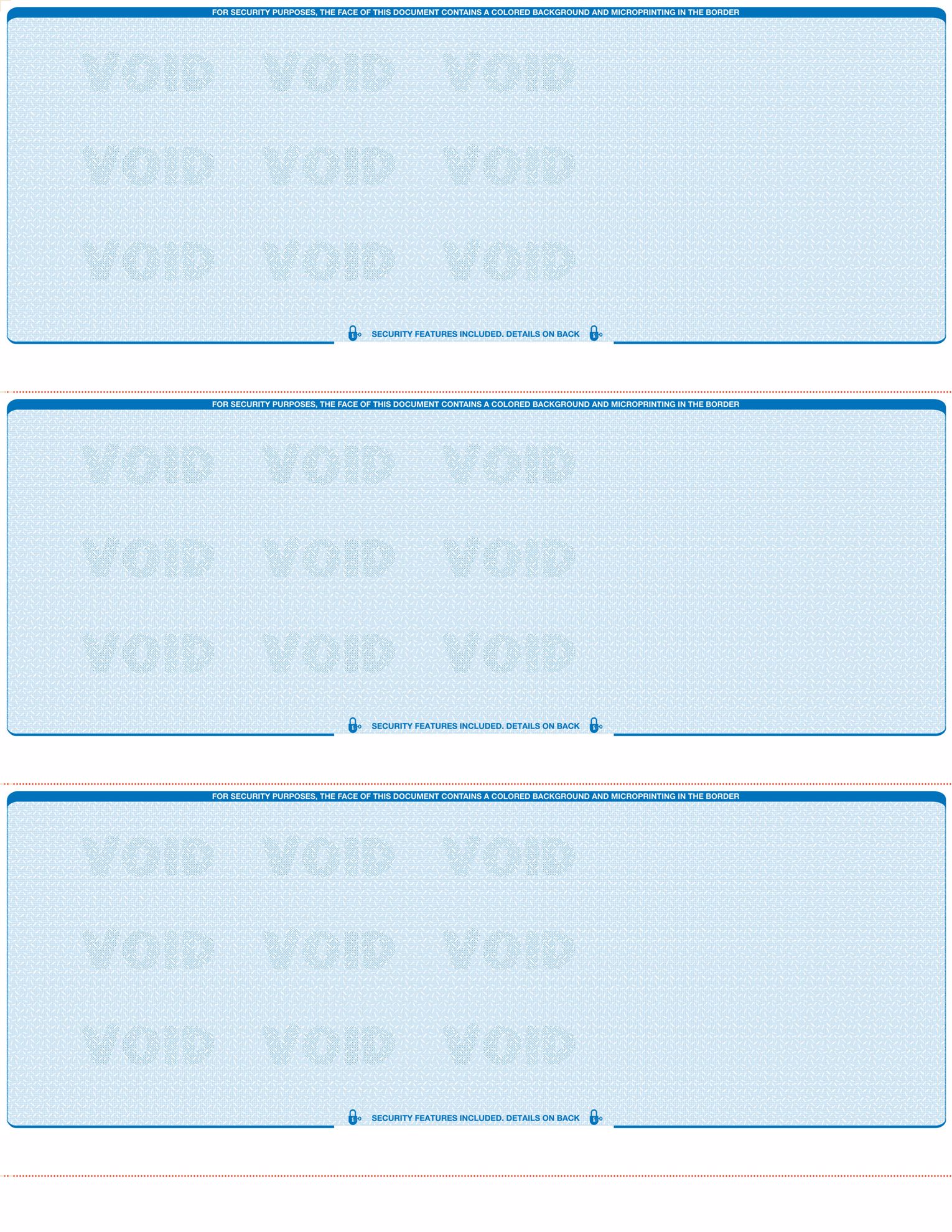
Several refunds in one sitting go faster on three per page stock. See blank checks three per page for that format.
What has to be in the itemized statement?
The basis for and the amount of any security received, and how that security was disposed of, with any remaining balance returned. In other words, the tenant should be able to read the deposit down to zero without asking a question.
- The deposit as received, stated as a figure rather than implied.
- Each deduction on its own line, with what it was for.
- The arithmetic, so the balance follows from the lines above it.
- The balance returned, matching the check to the cent.
Write it for someone who is already annoyed. A statement that explains itself prevents most disputes, and a vague one creates them even where every deduction was fair.
What documents travel with it?
Copies of the documents showing the charges, and California sets out what that means for each kind of cost. The level of detail is higher than most landlords expect.
- Work you did yourself: describe the work, the time spent and the reasonable hourly rate.
- Work by someone else: a copy of the bill, invoice or receipt, and where it does not show the provider's name, address and telephone number, add them.
- Materials: a bill, invoice or receipt, and for items bought regularly a vendor price list may be enough.
- Repair or cleaning deductions: the photographs taken under the statute, with a written explanation of the cost.
Is there an exemption for small amounts?
There is. Where total repair and cleaning deductions are 125 dollars or less, those documentation rules do not apply, unless the tenant requests the documentation within 14 days of receiving the statement. The statement itself is still required either way.
Who should the check be payable to?
The tenant, named as the lease names them. The question gets interesting when several people signed, and the safe answer is usually one check naming all of them rather than separate payments split by guesswork.
- One item naming every tenant keeps you out of their internal argument.
- Split only on written instruction signed by all of them.
- Use the names on the lease, not nicknames from the tenancy file.
- Keep the instruction with the statement copy in the property file.
Our guide to how to write a business check by hand covers getting the payee line right, which is where this one goes wrong.
How may it be delivered?
By personal delivery, or by a check payable to the tenant sent by first-class mail with postage prepaid. Where rent or the deposit was paid electronically, California sends the refund electronically to an account the tenant designates, unless the parties agree otherwise in writing.
The statement follows slightly different rules. It may go by personal delivery or first-class mail, or by email where both parties have agreed to that.
Address it to what you were given. Mailings go to the address the tenant provided, and where none was given, to the unit that was vacated.
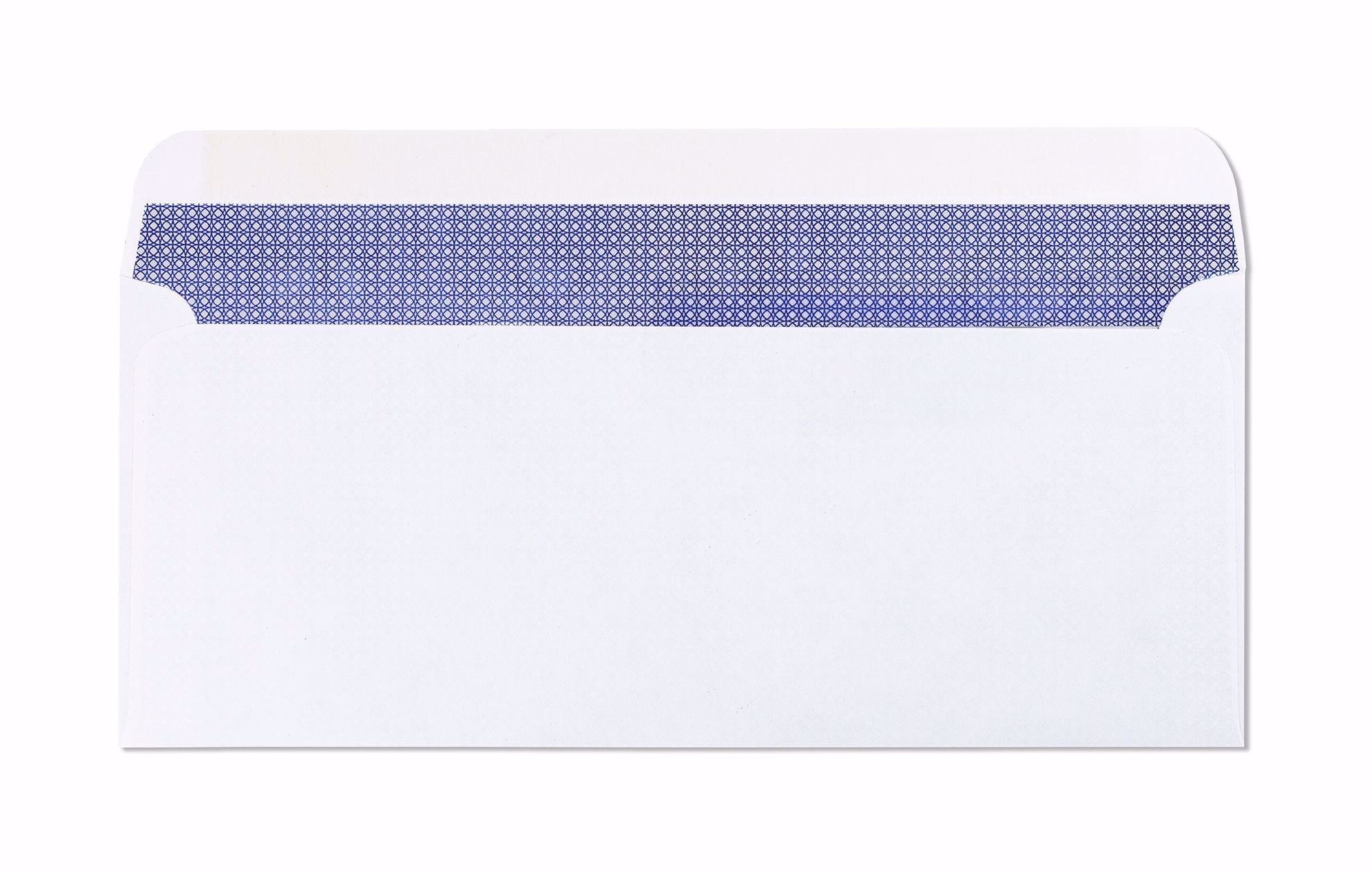
See double window envelopes for mailing the check and the statement together.
What if it is never cashed?
It stays the former tenant's money. People move twice in a year and forget a small refund, and the temptation to write the balance back after a while is exactly what unclaimed property law exists to prevent.
- Keep it on an outstanding list with the age showing.
- Try the forwarding address again after a few months.
- Reissue where the tenant never received it, with a stop on the first item.
- Follow your state's holder process for anything that stays unclaimed.
- Never take it to income, whatever the amount.
Our guides to the check register and how long a business check is good for cover the outstanding list and the stale item question behind it.
What stops a refund turning into a dispute?
Evidence gathered at the start rather than assembled at the end. Almost every deposit argument comes down to the same disagreement about what the place looked like on day one, and the landlord who can answer that in pictures rarely has the argument at all.
| When | What to capture | Why it helps later |
|---|---|---|
| Move in | Dated photographs and a signed condition list | Sets the baseline both sides agreed |
| During the tenancy | Repair requests and what was done | Separates wear from damage |
| Move out | Photographs taken the same day, plus meter readings | Fixes the condition at handover |
| Before issuing | Invoices matched to the lines you are deducting | Makes the statement self explanatory |
Deduct only what you can show. A landlord who drops a questionable line rather than defending it usually keeps the goodwill and avoids a claim that would cost more than the item.
What if the tenant disputes the statement?
Answer in writing, within a few days, and attach whatever you did not send the first time. Most disputes at this stage are about feeling unheard rather than about the amount, and a calm reply with the invoice attached settles a surprising number of them before anyone mentions a court.
Related reading
- Check register covers tracking refunds that have not been presented.
- Check signing policy covers who approves a refund in a managed portfolio.
- Check washing covers protecting a mailed payment.
- How to write a business check by hand covers naming joint tenants correctly.
What to do next
Look up your own state's deadline and write it on the move out checklist, then set your internal target a week earlier. Most late refunds are not disputes, they are a contractor invoice that arrived on day nineteen.
Then set the stock up for the volume you handle. Business checks are printed with the stub space a deduction summary needs, and double window envelopes keep the mailing simple.
About the Author
Managers of rented property order from us steadily, and the request attached to those orders never varies: more room on the stub. They have learned that a refund which explains itself is the one that does not come back as a phone call or a claim.
Deadlines, statements, documentation and delivery above are taken from California's security deposit statute. It appears here only as a worked example, since every state writes its own version. Yours, and sometimes your city, decides what you have to do.
Last updated: November 10, 2026
A forged endorsement is the quietest form of check fraud. The front of the item is perfect, the amount is right, your account is debited for exactly what you intended to pay, and the only thing wrong is that the money went to the wrong person. Nobody notices until the supplier asks where their payment is.
Quick Summary
Loss from a forged endorsement is allocated by a short set of rules rather than by who feels most wronged. The payee who never received the money usually holds the claim, the issuer generally does not, and the answer changes completely when the person who signed was an employee entrusted with responsibility for the item.
- The claim is conversion, and the code applies that law to instruments.
- The issuer cannot bring it, nor can a payee who never took delivery.
- Liability is presumed to be the amount payable on the item.
- An entrusted employee's forgery is effective, which moves the loss to the employer.
- Access alone is not responsibility, and that distinction decides cases.
- Comparative fault applies where a bank failed to use ordinary care.
Here is how the position usually falls out depending on who did it.
| Who signed it | Usual starting position | What shifts it |
|---|---|---|
| A stranger who stole the mail | The payee claims against the bank that took it | Your own lack of ordinary care, if it contributed |
| Your employee with responsibility | The endorsement is treated as effective | A bank that failed to use ordinary care |
| Your employee with access only | The entrustment rule does not apply | What that person was actually authorized to do |
| An outsourced bookkeeper | Treated as an employee for this rule | The scope of responsibility you gave them |
Treat this as background on payment documents rather than as advice. The outcome of any real loss turns on the facts and on how your state enacted the commercial code, which makes your attorney the right person to ask.
Most of these items are intercepted in the mail. Business checks can be printed on stock designed to resist tampering before that happens.
What this guide covers
- What is a forged endorsement?
- Who can bring the claim?
- What happens when an employee did it?
- Can the bank share the loss?
- What evidence do you need?
- How quickly should you report it?
- How do you make it harder?
What is a forged endorsement?
A forged endorsement is a signature on the back of a check made by someone with no authority to sign for the payee. It is used to deposit or cash an item that belonged to another party. A forged signature on the front is a separate problem with its own rules.
The practical difficulty is that nothing looks wrong from your side. Your account is debited for the amount you authorized, against a check number you issued. The reconciliation balances perfectly while the money sits in somebody else's account.
How does it usually come to light?
- A supplier chases a payment you believe you already made.
- A statement query turns up an endorsement nobody recognizes.
- A second payment is requested, and the first one cannot be traced to the payee.
- An employee leaves and the pattern stops without explanation.
Who can bring the claim?
Usually the payee who should have been paid. The Uniform Commercial Code says the law applicable to conversion of personal property applies to instruments. An instrument is converted where it is taken by transfer other than negotiation from a person not entitled to enforce it, or where a bank makes or obtains payment for such a person.
Two groups are shut out by name. The action may not be brought by the issuer or acceptor of the instrument, nor by a payee or indorsee who did not receive delivery of the instrument, directly or through an agent or co-payee.
That second exclusion surprises people. A payee whose check was stolen in the mail before it ever arrived may sit outside the conversion route. The practical answer is often a replacement payment from you, with the claim pursued further up the chain.
How much is recoverable?
The code presumes the measure of liability to be the amount payable on the instrument, capped at the claimant's interest in it. There is one carve out. A representative other than a depositary bank, acting in good faith, is not liable beyond any proceeds it still holds.
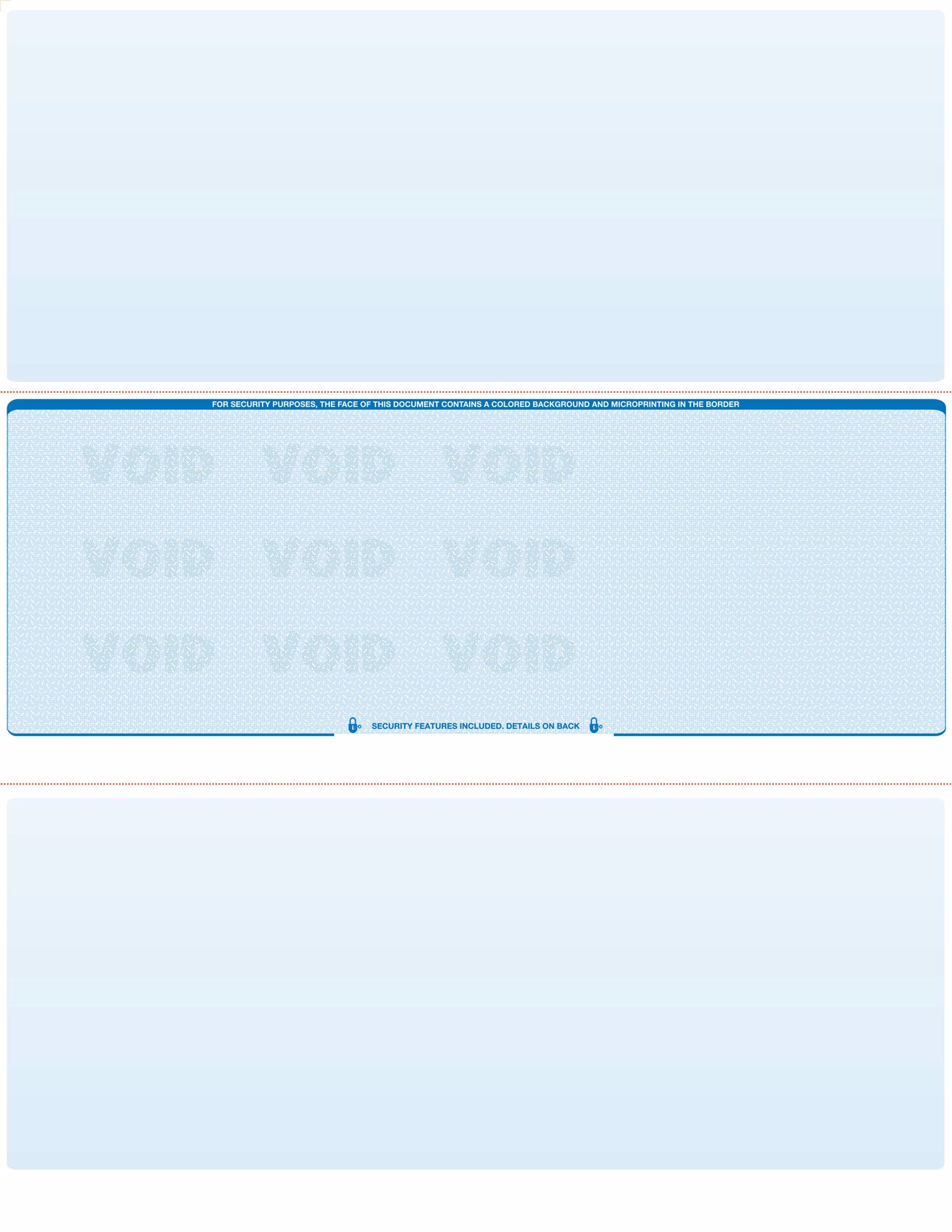
The issue record is what proves what you intended to pay. See blank checks on the middle for stock with two record areas.
What happens when an employee did it?
The answer turns over. Where an employer entrusted an employee with responsibility for an instrument and that employee makes a fraudulent indorsement, the code says the indorsement is effective as the indorsement of the person to whom the instrument is payable.
That one sentence is why internal fraud so often lands with the employer rather than the bank. The law treats the employer as the party that was best placed to prevent it, because the employer chose who to trust.
What counts as responsibility?
Authority to sign or endorse instruments on behalf of the employer, and similar duties over them. The code draws the line clearly: authority that merely allows an employee to have access to instruments is not responsibility.
- A payables supervisor who prepares and endorses items has responsibility.
- A clerk who opens the post has access, which is a different thing.
- An outsourced bookkeeper is included, since the definition covers an independent contractor and an employee of one.
- Job titles do not decide it, the duties actually given do.
Our guide to check signing policy covers writing those duties down, which is the document that answers this question later.
Can the bank share the loss?
Yes, and the test is ordinary care. The same rule allows a claim against a payor or taker who failed to exercise ordinary care in paying or taking the instrument. The failure has to have substantially contributed to the loss, and recovery runs only to the extent it contributed.
The wider negligence rule works the same way in reverse. A person whose own failure to exercise ordinary care substantially contributes to a forged signature is precluded from asserting it against someone who paid in good faith. Where both sides failed, the loss is allocated between them.
Expect a split rather than a winner. These cases rarely end with one party carrying everything, and the records each side can produce decide the proportions.
What evidence do you need?
Everything that shows what you issued, where it went and who signed the back. Ask for the images early. The useful one is the reverse of the item, and most businesses only ever look at the front.
- The register entry showing the number, date, payee and amount as issued.
- The stub or voucher copy recording what the payment was for.
- Front and back images requested from your bank in writing.
- Proof of mailing or the handover record if it was delivered by hand.
- The payee's statement confirming they never received or banked it.
- Your reporting dates, since promptness is part of every one of these rules.
The first of those is the document that carries the most weight, and a check register is where it lives.
How do you make it harder?
By shortening the time an item spends outside your control. Then by splitting the duties that make an internal forgery possible. Neither step costs much, and both are easier to arrange than to argue about afterwards.
- Seal payments individually so nothing identifiable shows through the envelope.
- Keep the preparer, the signer and the reconciler apart, even in a small team.
- Post from a collection box rather than an unattended outgoing tray.
- Reconcile weekly, because the deadlines in these rules reward speed.
- Ask your bank about payee name matching on the items you send out.
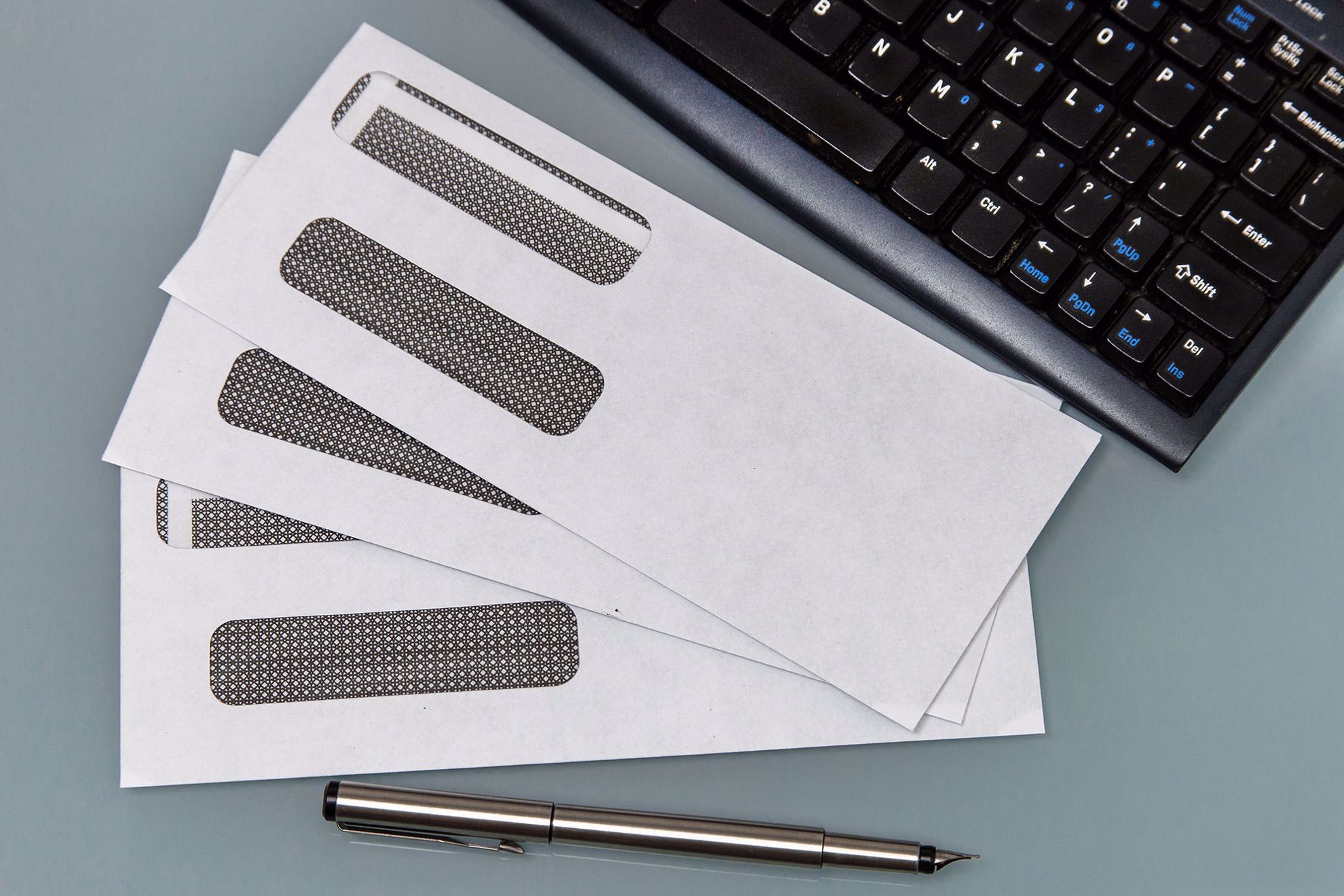
See double window self seal envelopes for the format that shows nothing but the addresses.
How quickly should you report it?
The same week you find it. Every rule in this area rewards promptness, and a business that waited is the easiest one to blame.
- Tell your bank in writing, on the day, with the item number and amount.
- Ask for the front and back images in the same message.
- Tell the payee and agree how the real payment will be made.
- Review the whole period, not just the one item you found.
- Keep every date, because the record of when you acted is part of your case.
One item is rarely alone. Where the signature came from inside the business, the pattern usually runs back further than the payment that exposed it, so the review matters more than the single claim.
Related reading
- Check washing covers the physical attack that precedes many of these.
- Check signing policy covers the duties the entrustment rule turns on.
- Check register covers the issue record you will be asked for.
- High security business checks covers tamper resistant stock.
What to do next
Write down who in your business may endorse an item on the company's behalf. Check that the list does not include anyone who also reconciles the account. That single page is the difference between the entrustment rule working for you and against you.
Then look at how payments leave the building. Business checks are printed to your layout, and high security business checks make interception less rewarding.
About the Author
Of everything customers ring us about, this is the hardest one for them to say out loud, because it usually involves somebody they trusted. There is no comfortable version of that conversation. The businesses that come through it best are the ones that kept good records before they had any reason to.
Conversion, entrustment and ordinary care as described above come from the commercial code provisions on negotiable instruments, as enacted in your own state. A loss that has already happened belongs with your bank and your attorney, not with a web page.
Last updated: November 9, 2026
You banked the payment, marked the invoice paid, and moved on. Nine days later the money disappears from the account along with a fee, and the invoice is open again. It is an unpleasant surprise, and it is also an ordinary one that has a clear order of steps.
Quick Summary
A returned check reverses the payment, not the debt. Your bank can take the credit back because the settlement it gave you was provisional, and the person who wrote the check remains obliged to pay it. Those are two separate rights, and keeping them separate is what gets the money back.
- The credit was provisional until the paying bank settled finally.
- Charge-back can happen whether or not the bank can return the item itself.
- A midnight deadline applies to the returning bank, with liability for delay.
- The drawer still owes you, on the terms of the item as issued.
- Redepositing blind usually fails twice and costs a second fee.
- One return is a bad week, two is a pattern worth acting on.
The reason given on the advice tells you which problem you are dealing with.
| Reason given | What it usually means | Sensible next step |
|---|---|---|
| Insufficient funds | Timing, often a payment run that landed first | Agree a date, then redeposit or take another method |
| Account closed | The account no longer exists | Do not redeposit, ask for a replacement payment |
| Stop payment | A dispute you may not know about | Call before chasing, there is a reason behind it |
| Signature or endorsement issue | A paperwork fault, not a funding one | Fix the defect and present it again |
| Refer to maker | The paying bank is not explaining | Ask the customer directly, politely and early |
Read this as background rather than as advice. It is not legal, banking or collection guidance. What you may charge and how you may chase payment are set by your state's law and your own contracts, and your attorney is the person to confirm both.
On the paying side, business checks are printed with a stub that records what each payment settles, which is the detail missing when a payment has to be reconstructed later.
What this guide covers
- What does a returned check actually mean?
- Can the bank take the money back?
- Does the customer still owe you?
- Should you redeposit it?
- How do you ask without damaging the relationship?
- What should change in your process?
- How should the reversal be recorded?
What does a returned check actually mean?
It means the item was not finally paid by the bank it was drawn on, so the credit your bank gave you was never permanent. Deposits of this kind are provisional until the paying bank settles, and the gap between those two moments is where the surprise lives.
That lag is the reason a payment can look complete in your ledger for over a week and still unwind. Nothing went wrong in your process. The money simply never finished arriving.
Can the bank take the money back?
Yes, and the right is explicit. Where a collecting bank gave provisional settlement and did not receive final settlement, the Uniform Commercial Code allows it to revoke the settlement it gave, charge back the amount of any credit given for the item to your account, or obtain a refund from you, and it may do so whether or not it is able to return the item.
Is the bank under a deadline?
It is. The same section requires the bank to return the item or send notice by its midnight deadline, or within a longer reasonable time after it learns the facts. A bank that acts late keeps its remedies but becomes liable for any loss resulting from the delay.
There is also an end point. Those rights terminate if and when a settlement for the item received by the bank is or becomes final, which is why an item that has been quiet for a long time is usually safe.
Good records are what make a disputed payment provable. See blank checks on the bottom for stock with room to write them.
Does the customer still owe you?
Yes, and this is the part businesses forget while they are annoyed about the fee. The code says that if an unaccepted draft is dishonored, the drawer is obliged to pay the draft according to its terms at the time it was issued, and that the obligation is owed to a person entitled to enforce it.
In plain terms, the failed check did not cancel anything. The invoice is live, the debt is unchanged, and you now hold a document showing the customer tried to pay and the payment did not complete.
Does that change if the item was certified?
It does. Acceptance by a bank releases the person who wrote the item, and the code applies that release whenever and however the acceptance was obtained. It is one reason a certified or bank issued item sits in a category of its own.
Should you redeposit it?
Only with information. A second deposit on the same day the first one failed is a coin toss that usually costs another fee, and it annoys a customer who was already going to fix it.
- Read the return reason first, because it decides whether redepositing is sensible at all.
- Call the customer rather than emailing, and ask when funds will be in place.
- Agree a specific date and say you will deposit on it.
- Never redeposit on a closed account or where a stop payment was placed.
- Record the second attempt against the same invoice so the history stays readable.
Deposit items promptly as a general habit. The code carries a rule aimed at a check not presented for payment or given to a depositary bank for collection within thirty days after its date, under which a drawer who loses funds because the drawee suspends payments can discharge the obligation by assigning its rights against that bank.
How do you ask without damaging the relationship?
By assuming the ordinary explanation until you have reason not to. Most returned items come from a payment run landing in the wrong order, not from anyone trying to avoid paying, and the first call sets the tone for whether you keep the account.
- Call the person you normally deal with, not the accounts inbox.
- Lead with the facts, the item number, the date and the reason given.
- Ask what happened before explaining what you want.
- Offer two routes, a redeposit date or a different payment method.
- Confirm in writing the same day, briefly and without heat.
Save the formal tone for the second failure. A business that handles the first one quietly is usually the supplier that gets paid first next time, which is worth more than the fee you were going to argue about.
What should change in your process?
Two things, and neither is about distrusting customers. The first is knowing when a deposit is genuinely settled. The second is making sure a reversal is noticed by a person rather than discovered at month end.
- Do not treat a deposit as settled on the day the balance moves.
- Watch for reversals weekly, matched against open invoices.
- Set a rule for releasing goods against cleared funds above a stated value.
- Keep the returned item and the advice together in the customer file.
- Review repeat offenders quarterly, not case by case in a bad mood.

Smaller customers often pay from personal stock. See personal checks for that format.
How should the reversal be recorded?
As a reversal of that specific payment, against that specific invoice. The habit that causes trouble is posting the charge-back as a bank fee or a general adjustment, because the invoice then stays closed and nobody chases it.
| What to record | Why it matters later |
|---|---|
| The item number and date | Identifies which payment unwound |
| The reason given on the advice | Decides whether a second attempt is sensible |
| The invoice reopened | Puts the balance back in your aged debt report |
| The bank fee charged to you | Evidence of your actual cost if you recharge it |
| The date and outcome of your call | Shows the account was handled, not ignored |
Reopen the invoice the same day. A reopened balance gets chased by the normal process, and an unrecorded one waits for someone to notice a gap in the bank reconciliation weeks later.
What if the customer has already paid again?
Match the new payment to the reopened invoice rather than treating it as a credit on account. A duplicate credit sitting on a customer record is how a business ends up refunding money it was genuinely owed, and it is remarkably hard to unpick a year later.
Related reading
- Check register covers recording a reversal against the original item.
- How long is a business check good for covers what happens to an item nobody banks.
- How to endorse a check covers the endorsement faults that cause returns.
- How to fill out a business deposit slip covers getting the deposit right first time.
What to do next
Pull your last three months of bank activity and look for reversals you did not notice at the time. If any of them are still sitting as paid invoices in your ledger, that is the gap worth closing this week.
Then look at the stock you pay on, since the same habits apply in reverse. Business checks are printed with the stub detail that makes a payment traceable from either end.
About the Author
Because we supply the stock that both sides of this use, we hear both versions of the story. The customer whose payment failed is usually mortified. The supplier is usually more worried about the relationship than the money. Both handle it better knowing the rules.
The charge-back and drawer obligation points here follow the Uniform Commercial Code articles on bank deposits and collections and on negotiable instruments. Your state's enactment governs, and what you may charge or claim is a question for your counsel.
Last updated: November 9, 2026
Most businesses first hear about positive pay from a bank relationship manager, decide it sounds like something larger companies need, and move on. The decision usually gets revisited on the morning somebody opens a statement and finds a payment nobody in the building can explain.
Quick Summary
Positive pay compares every check presented for payment against a file of the checks you say you issued. Anything that does not match is held as an exception until you decide. The reason it matters beyond convenience is that your account agreement sits inside the definition of what the bank may charge to your account.
- You send an issue file, listing check number, amount, date and account.
- The bank matches presented items and holds the ones that do not agree.
- Payee matching adds the name check, which the standard version does not do.
- Unanswered exceptions follow a default rule written into your service agreement.
- Properly payable is defined by your agreement, not only by your signature.
- Ordinary care cannot be disclaimed, whatever else an agreement says.
The three services sold under this heading do different jobs, and the names are easy to mix up.
| Service | What it compares | What still gets through |
|---|---|---|
| Positive pay | Check number, amount, account, date | An altered payee on an otherwise matching item |
| Payee matching version | The above plus the payee name | A forged signature on a matching item |
| Reverse version | Nothing. You review a daily list yourself | Anything you miss in the review window |
| No service | Nothing before payment | Everything until the statement arrives |
Everything below is general information about banking services. Nothing here is legal or banking advice. What binds you is your own account agreement together with the commercial code as your state enacted it, so ask your bank and your attorney before relying on any of it.
The service works from your issued list, so the stock has to be numbered in a sequence you control. Business checks are printed to continue your existing numbering.
What this guide covers
- What is positive pay and how does it work?
- Why does it matter legally?
- What does payee matching add?
- What goes in the issue file?
- What happens when an exception appears?
- What does the service not cover?
What is positive pay and how does it work?
Positive pay is a bank service that checks every item presented against a list of the checks you say you wrote. The list is called the issue file. Matching items clear in the ordinary way. Anything that does not agree is parked as an exception and sent back to you with a deadline.
The useful part is the order of events. A control that reviews payments after they clear tells you about a loss. This one asks a question before the money moves, which is a different thing entirely for the person who has to recover it.
What does the daily rhythm look like?
- You run payments and upload the issue file the same day.
- Items arrive at the bank and are matched against that file.
- Exceptions appear in a queue, usually first thing in the morning.
- Someone reviews and decides pay or return, before the stated cut off.
- Unanswered items follow the default written into your agreement.
Why does it matter legally?
Because the agreement you sign changes what the bank is entitled to charge you for. The Uniform Commercial Code says a bank may charge against the account of a customer an item that is properly payable from that account, and it defines an item as properly payable if it is authorized by the customer and is in accordance with any agreement between the customer and bank.
Read that second limb again. The agreement is part of the test, which is why the terms attached to a fraud service are worth more attention than the brochure describing it.
Can an agreement move the loss onto the business?
To a degree, yes. The code says the effect of the provisions of the article may be varied by agreement, which is how a bank can write terms around who carries a loss where a service was offered and declined.
There are limits, and they matter. The same section says the parties cannot disclaim a bank's responsibility for its lack of good faith or failure to exercise ordinary care, nor limit the damages for those failures. Standards for measuring responsibility can be set by agreement only where they are not manifestly unreasonable.
One more line is worth knowing. Conduct that complies with Federal Reserve regulations and operating circulars, or with clearing house rules and general banking usage not disapproved by the article, is treated as prima facie the exercise of ordinary care. That is the standard a bank will point to.
A controlled number sequence is what makes an issue file possible. See blank checks on the top for that stock.
What does payee matching add?
It compares the payee name on the face of the item, not just the number and the amount. That single addition closes the gap that catches most businesses by surprise.
Picture a check stolen from the mail, washed, and made payable to someone else for the same amount under the same number. The standard version sees a match on every field it looks at, and pays it. Name matching is what stops that item.
- Ask which version you are being quoted, because both are sold under the same name.
- Expect name matching to be approximate, so short and consistent payee names help.
- Use the registered entity name in your vendor master and on the file.
- Expect more exceptions at first, mostly from your own naming inconsistencies.
Our guide to check washing covers the physical attack this feature answers.
What goes in the issue file?
Account, check number, amount, issue date, and the payee name where you are using payee matching. The format comes from the bank, and most accounting systems export it directly.
The file is not the hard part. Keeping it complete is, because the items that cause real trouble are the ones created outside the payment run.
- Upload after every run, not on a weekly schedule.
- Add manual checks immediately, including anything written at a counter or on site.
- Report voids and stops into the same file so they are flagged if presented.
- Reconcile the file against your register weekly rather than monthly.
- Name a second person who can upload when the first is away.
A manual check is the usual failure. Someone writes one from a book in a drawer, nobody tells the bank, and the item lands as an exception that a tired reviewer approves because it looks familiar.
Our guide to the check register covers the record that keeps the file honest.
What happens when an exception appears?
You get a short window, usually the same morning, to look at the image and decide pay or return. The decision window and the cut off time are in your service agreement, and so is the rule that applies when nobody answers.
Which default applies to your account?
That depends on your bank and your agreement. Some default to paying the item, some to returning it. Neither default is wrong in itself, and both cause problems when the business assumes the other one.
- Pay by default risks letting a fraudulent item through on a quiet day.
- Return by default risks bouncing a genuine payment to a supplier.
- Either way, write the answer on the same page as your holiday cover plan.
- Name two reviewers, because one person on leave should not change the outcome.
Does this replace reviewing your statements?
No. Your own duty to look at statements survives it. The code expects reasonable promptness in that review and prompt notice to the bank once something is apparent. Two outer limits sit behind that: a window of no more than thirty days for further items by the same wrongdoer, and a one year cut off counted from when the statement or items reached you.
What does the service not cover?
Three things, and each one needs a different control. Knowing the edges of it is what stops a business treating it as the whole answer.
- A forged signature on an item whose number and amount match your file.
- Electronic debits, unless you add an ACH debit filter or block.
- Anything issued outside the process, which never reached the file at all.
- Blank stock that walks out of the building, which is a storage question.
Our guides to check signing policy and high security business checks cover the first and the last of those.
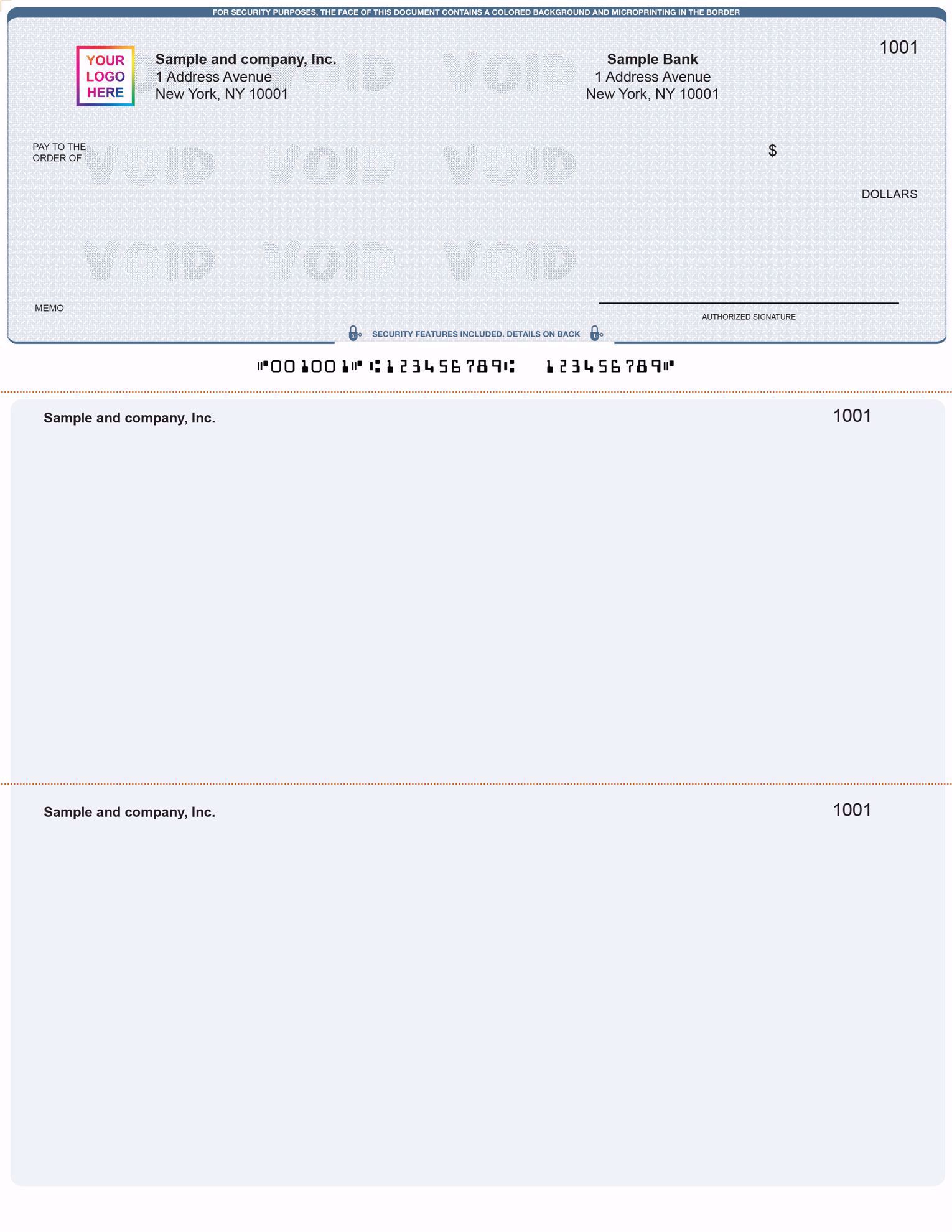
Most issue files come straight out of accounting software. See check on top accounting software checks for that format.
Related reading
- Check washing covers the attack payee matching answers.
- Check register covers the record your issue file depends on.
- Blank check security features covers what the printed features do.
- Check signing policy covers who may approve a payment or an exception.
What to do next
Ask your bank two questions this week: whether the service you have is payee matching or number and amount only, and what happens to an exception nobody answers. Those two answers tell you more about your exposure than any product sheet.
Then make sure the stock supports it. Business checks are printed in the number sequence your issue file expects, and high security business checks add tamper resistance for the items most worth protecting.
About the Author
Our presses run every working day for businesses across the United States. The call that starts a conversation about this service is nearly always the same one. Someone has found a payment they cannot explain, and they ring us first because the item is the only part of it they can hold.
Everything stated above about properly payable items, agreements and ordinary care comes from the commercial code provisions on bank deposits and collections. How your state enacted them, and what your bank asked you to sign, decide where you actually stand.
Last updated: November 6, 2026
The last check run of the year is treated as an ordinary run with a worse date. It is not. It carries a cutoff, a review of everything still outstanding, and two decisions about next year that are far easier to make now than in the first week of January.
Quick Summary
Work backwards from the date you want items in the mail, publish a cutoff, then spend the saved time on the outstanding list rather than on printing. For a business on the cash method, IRS guidance states that under the cash method you generally deduct expenses in the tax year in which you actually pay them, which is why the timing of the run matters beyond tidiness.
- Publish a cutoff and hold it, including for the people who ask nicely.
- Run early in the last week, not on the final afternoon.
- Review every outstanding item, which is the real year end work.
- Never write an outstanding check back to income. It is the payee's money.
- Keep the numbering continuous across the year end.
- Order stock in December, because January is when shortages show up.
The table below sets out the sequence and what each step produces.
| Step | When | What it produces |
|---|---|---|
| Publish the cutoff | Early December | A date everyone has seen in writing |
| Review outstanding items | Before the run | A chase list and a reissue list |
| Run and mail | Mid final week | Payments out with time to spare |
| Order stock and set numbering | Same week | A January that starts without a gap |
This page is general information about payment process. It is not tax, legal or accounting advice, and the timing of deductions and the unclaimed property rules that apply to you depend on your circumstances and your state, so treat your accountant as the authority.
If the run shows the stock is thin, business checks are printed to your existing layout and numbering, which is the part people forget to check until the printer is loaded.
What this guide covers
- When should the last run happen?
- How do you set a cutoff that holds?
- What do you do with outstanding checks?
- How should you void and reissue?
- What about numbering and stock?
- What does the accountant need?
- What goes wrong most often?
When should the last run happen?
Early enough that approval, signing and mailing all finish before the cutoff you set. In practice that means the middle of the last working week, because the three steps after printing are the ones that absorb the delay.
Timing also has a consequence beyond tidiness. For a business on the cash method, IRS guidance states that under the cash method you generally deduct expenses in the tax year in which you actually pay them, so a run that slides into January takes those deductions with it.
How do you work the date backwards?
- Fix the date you want items in the mail.
- Subtract signing time, including the second signature your policy requires.
- Subtract approval time for the people who will be on holiday.
- Subtract a day for exceptions, because there are always exceptions.
- Publish the result as the cutoff, in writing, to everyone who submits invoices.
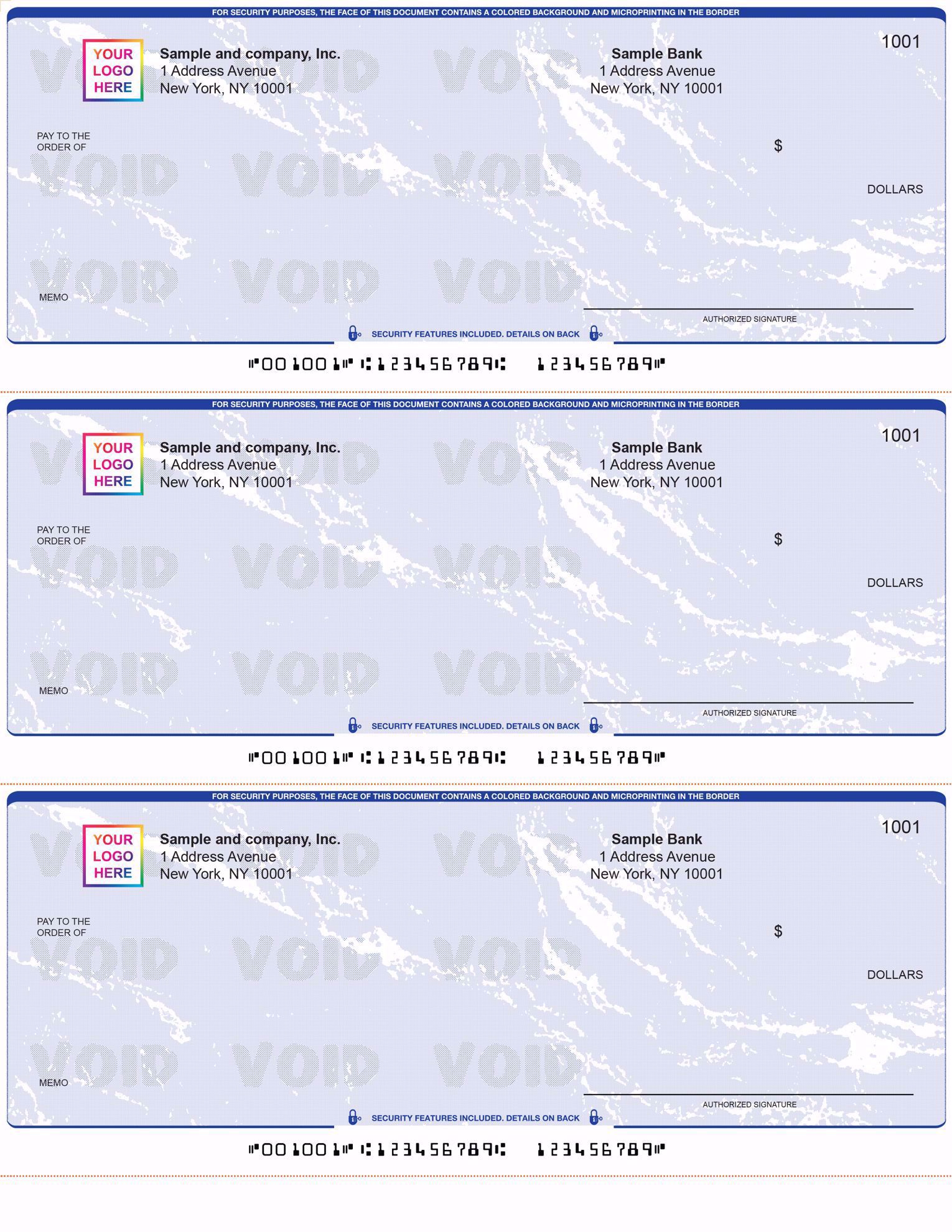
A large run goes faster on three per page stock. See three on a page accounting software checks for that format.
How do you set a cutoff that holds?
By deciding in advance what happens to anything that arrives late. A cutoff without a stated consequence is a suggestion, and the exceptions granted in the last week are what turn a clean close into a reconciliation problem.
- Say where late invoices go, which is the first run of January.
- Name one person who can grant an exception, and only one.
- Log every exception with the reason, on the day.
- Ban unrecorded manual items, which is where the register breaks.
- Repeat the cutoff twice before it arrives, not once.
The manual item is the real risk. A handwritten payment made after the run, from a book in a drawer, is the one that never reaches the register and surfaces as an unexplained debit in February.
What do you do with outstanding checks?
Treat the list as the main piece of year end work. Printing this year's payments takes an hour. Working out why a payment from April is still sitting uncashed takes longer and matters more.
- Produce the outstanding list with ages, not just a total.
- Split it by reason: recently issued, never received, disputed, unknown.
- Contact the payee on anything beyond a few months old.
- Reissue where the payee never received the item, with a stop on the first.
- Flag the genuinely unclaimed for your state's reporting process.
An outstanding check is not your money. It stays the payee's property, which is why writing the balance back to income is the one thing not to do, and why old items may become reportable unclaimed property in your state.
Our guide to how long a business check is good for covers the banking side of an aged item, and the obligation behind it outlives the bank's willingness to pay.
How should you void and reissue?
Only on confirmed facts, and always in the register first. The temptation in December is to clear the list by voiding everything old, which creates a worse problem if one of those items is still in circulation.
- Confirm the item was never presented against the bank record.
- Place a stop payment wherever there is any doubt.
- Record the void against the original number, with the date and the reason.
- Mark the physical item and keep it in the file rather than the bin.
- Issue the replacement with a new number, cross referenced to the first.
A check register is what makes that sequence provable afterwards, and check signing policy covers who may authorize a reissue in the first place.
What about numbering and stock?
Keep one continuous sequence across the year end. A gap in the numbers is how a missing item announces itself, and restarting at the first of January throws that away for the sake of tidiness nobody benefits from.
December is the right moment for the stock questions, because every answer takes longer in January.
- Count what each location actually holds, rather than what the last order was.
- Check the printed details against your current bank and address.
- Review the stub fields against what your team now needs to record.
- Confirm the next number so the new order continues the sequence.
- Order before the holidays, not in the first week back.
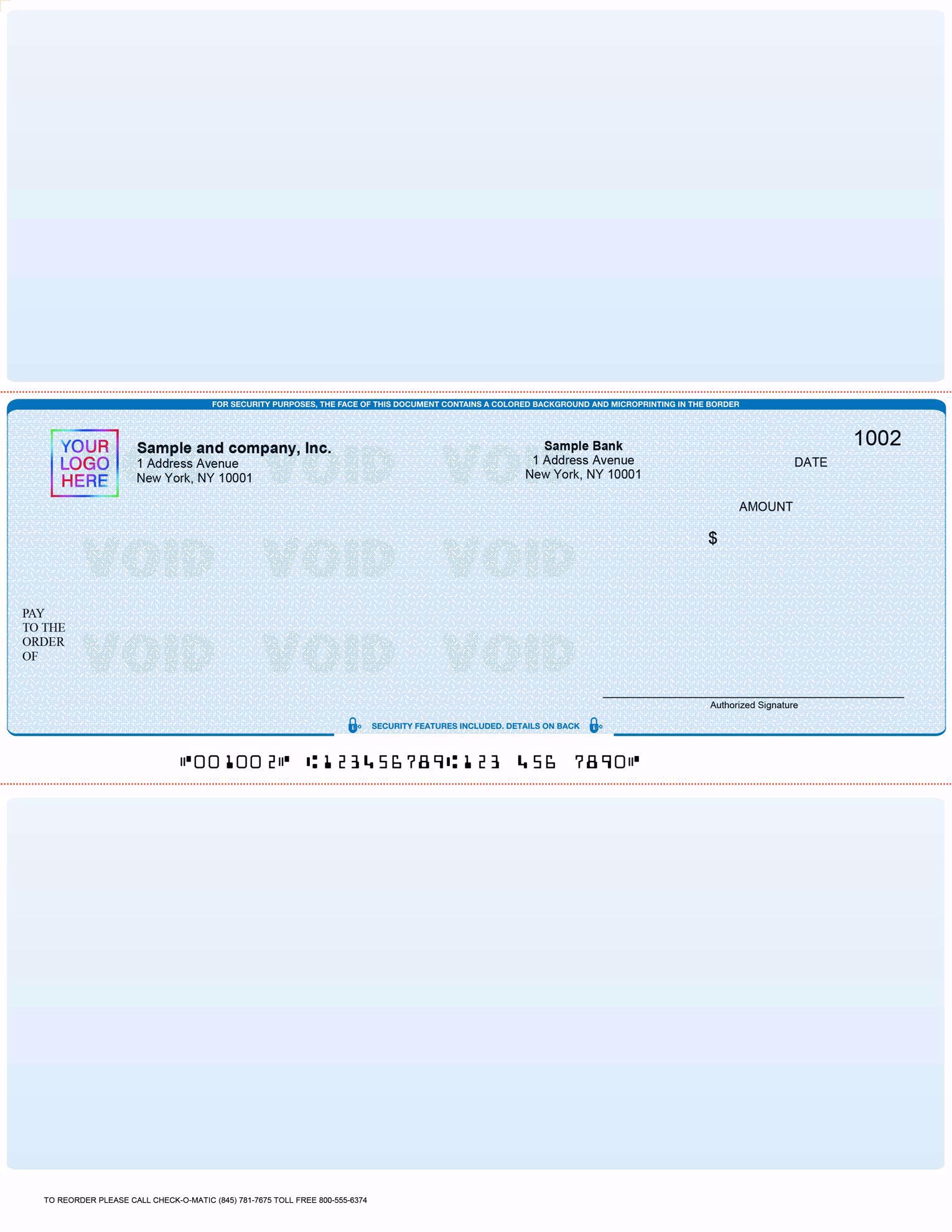
A middle position gives two record areas per payment. See check in the middle accounting software checks for that layout.
What does the accountant need?
Four documents, assembled while the detail is fresh. Handing these over in January, rather than answering questions about them in March, is the entire payoff for the work above.
- The register for the full year, complete and in sequence.
- The outstanding list at the cutoff, with ages and reasons.
- Voided and stopped items, with references and dates.
- The bank reconciliation, tying the register to the statement.
Keep a note of anything you could not resolve. An unexplained item that is flagged is a question, and the same item unflagged is a finding.
What goes wrong most often?
The same five things, in businesses of every size. None of them are accounting errors. All of them are process gaps that only appear in the one week of the year when half the approvers are away.
| What happens | Why it hurts | The fix |
|---|---|---|
| A manual item written after the run | Never reaches the register | Lock the manual book after the cutoff |
| Old items voided in bulk | One may still be in circulation | Confirm each one, stop where unsure |
| Unclaimed amounts taken to income | The money is not yours | Hold, notify, then report to the state |
| Numbering restarted in January | A missing item stops being visible | Continue the sequence across the year |
| Stock ordered in January | A run waits on delivery | Count the cupboard in early December |
Who should hold the blank stock over the holidays?
Whoever normally does, under the same lock, and not the person covering for them. A quiet building with unusual access patterns is exactly the moment to leave the custody arrangement alone rather than improvise one.
Count the unused stock before the break and again on the first day back, and write both counts down. It takes two minutes and it is the only way to know that nothing moved while the office was empty.
Related reading
- Check register covers the record the whole close depends on.
- How long is a business check good for covers aged and stale items.
- Check signing policy covers approvals during a holiday period.
- Check washing covers protecting a large batch in the mail.
What to do next
Put the cutoff date in writing this week and send it to everyone who submits invoices. Then produce the outstanding list with ages, because that one report decides how much work the close actually is.
Then check the stock cupboard. Business checks are printed to continue your existing numbering, and high security business checks suit the larger payments a year end run tends to contain.
About the Author
December is our busiest month, and the orders tell the same story every year. Somebody has opened the last box, found four sheets in it, and realized the next payment run is on Thursday.
The deduction timing point here follows IRS guidance on accounting periods and methods. When an expense falls, and what your state expects for unclaimed property, are questions for your accountant and your state administrator.
Last updated: November 6, 2026
Restaurant payroll is the only kind where part of the wage arrives from a customer. Everything awkward about it follows from that, and most of it has to be visible on the payment the employee receives.
Quick Summary
Three federal rules shape a restaurant payroll check. The tip credit has a cash wage floor and a notice condition, a mandatory service charge is wages rather than a tip, and a tip pool has limits on who can be in it. Managers and supervisors may never receive tips from a pool.
- Cash wage floor of 2.13 dollars per hour under federal rules for a tipped worker.
- Maximum tip credit of 5.12 dollars per hour, against a federal minimum of 7.25.
- The notice is a condition, not a courtesy. No notice means no credit.
- A service charge is not a tip, and it counts in the regular rate for overtime.
- A wider tip pool needs full cash minimum wage for every worker in it.
- State law often goes further, so treat the federal position as a floor.
Here is how the three categories of money behave differently once they reach payroll.
| Money | What it counts as | Effect on the check |
|---|---|---|
| Direct cash wage | Wages | Paid by you, shown by rate and hours |
| Customer tips | Tips | Support a tip credit, reported and shown |
| Mandatory service charge | Wages, not tips | Enters the regular rate for overtime |
| Pooled tips received | Tips | Allowed only within the pool rules |
This page is general information about payroll documents. It is not legal or employment advice, and state wage law frequently sets a higher cash wage or removes the tip credit entirely, so treat your state labor office and your counsel as the authority.
On the document, business checks can be printed with a stub deep enough to show the tip credit arithmetic rather than a single net figure.
What this guide covers
- Why is restaurant payroll different?
- How does the tip credit work?
- What do you have to tell employees first?
- Is a service charge a tip?
- Who can be in a tip pool?
- How should a multi unit operator set up accounts?
- What should the stub show?
- What should a franchise group keep on file?
Why is restaurant payroll different?
Because part of the pay is not yours to begin with. A tip belongs to the employee, a service charge belongs to the business, and the two look identical on a customer's receipt. Sorting them correctly is the whole job.
- Pay varies by shift rather than by a single salary.
- Two sources of money have to be added together each workweek.
- Headcount turns over quickly, so notices and records are repeated often.
- A franchise group runs several units with one back office.
- Many workers want paper, which makes the stub the main record they read.
How does the tip credit work?
It lets part of the minimum wage be satisfied by tips the employee actually receives. Federal guidance sets the arithmetic plainly: an employer must pay a tipped worker at least 2.13 dollars per hour, the maximum tip credit an employer can currently claim is 5.12 dollars per hour, and the federal minimum wage is currently 7.25 dollars per hour.
Tips plus direct wages have to reach that minimum in each workweek. Where they do not, the employer makes up the shortfall, and the make up belongs on the stub as its own line so the employee can see what happened.
Those figures are the federal floor. A number of states require a higher cash wage, and some do not allow a tip credit at all, so the state position decides what you actually pay.
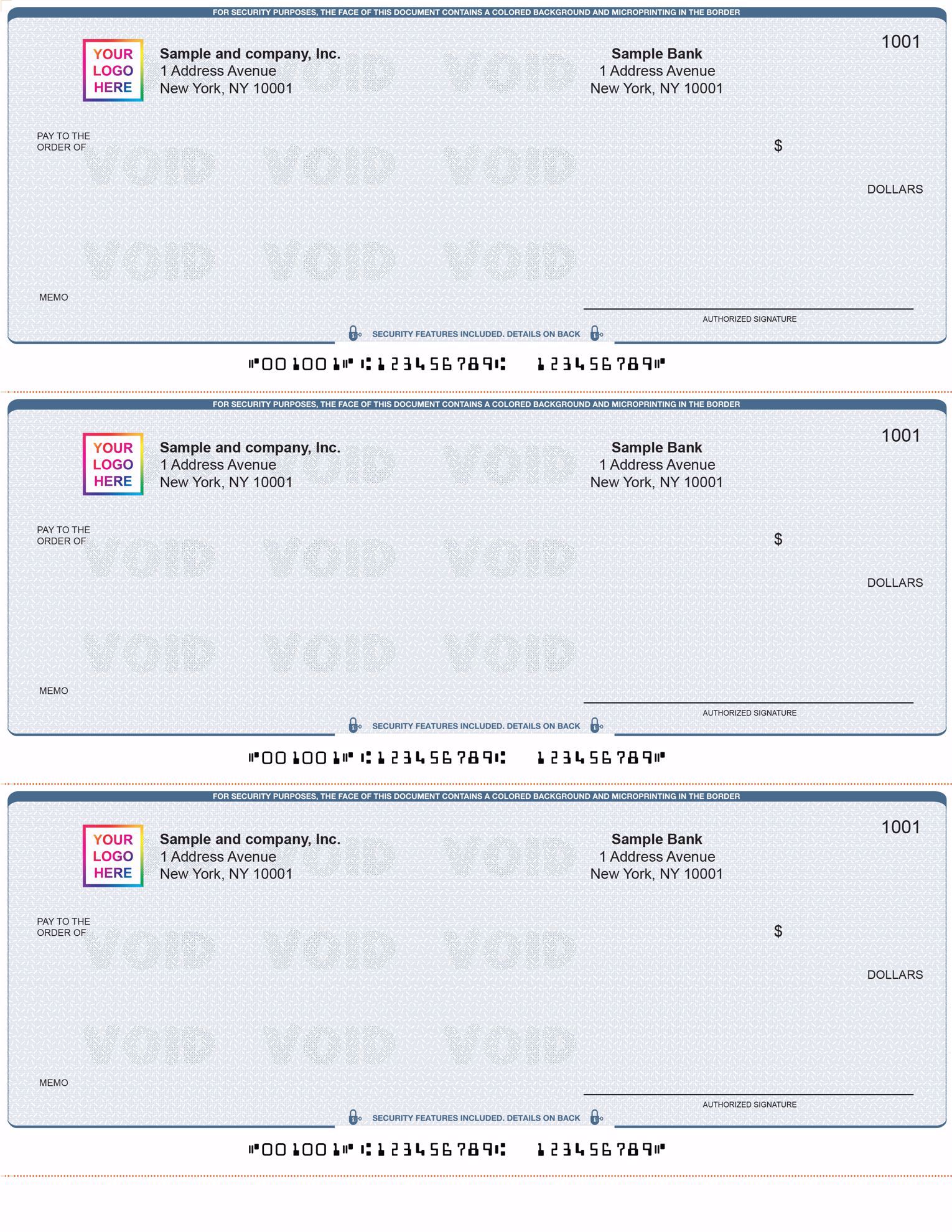
Three per page suits a payroll run with many small items. See three on a page accounting software checks for that format.
What do you have to tell employees first?
Five things, before the credit is taken. Federal guidance lists them as a condition of claiming the credit rather than as good practice, and it is explicit that an employer who does not give the notice cannot take the credit at all.
- The cash wage the employer is paying the tipped employee.
- The amount of the tip credit being claimed.
- That the credit cannot exceed the tips actually received, which is the protection for a slow week.
- That all tips are kept by the employee, except under a valid pooling arrangement.
- That the credit does not apply unless the employee has been informed of these points.
The notice may be oral or written. Give it in writing anyway, and keep a signed copy with the start paperwork, because in a business with high turnover the oral version is impossible to evidence a year later.
Is a service charge a tip?
No, and the distinction has a payroll consequence. Federal guidance states that a mandatory charge, such as a 15 percent service charge, is not a tip under the FLSA. Amounts of that kind can count toward minimum wage and overtime obligations, and they must be included in the regular rate for overtime.
That last point is the one that catches operators. Distributing service charge money to staff does not make it a tip, it makes it wages, and wages raise the overtime rate for the week in which they were earned.
Tips left on top of a service charge are still tips. The same guidance notes they can count toward tipped employee status and toward the tip credit.
Who can be in a tip pool?
It depends which kind of pool you are running. Federal guidance describes a traditional pool, which an employer may require when taking a tip credit, as limited to employees who customarily and regularly receive tips.
A wider pool is possible and it comes with a price. Pools that include other workers, such as cooks or dishwashers, are allowed only where every worker in the pool receives at least the full federal minimum wage in cash, which means giving up the tip credit for those employees.
One rule has no exception. Managers and supervisors may never receive tips from a pool, whatever hours they work on the floor and whatever the arrangement has always been in that building.
How should a multi unit operator set up accounts?
So that every payment can be traced to one unit without opening a bank account for each. Most franchise groups do this with numbering rather than with bank structure, which keeps the reconciliation simple and the banking cheap.
- Give each unit its own check number series, with no overlap between units.
- Print the unit name or number on the stock so a stray item identifies itself.
- Keep one payroll account unless a franchise agreement or lender requires otherwise.
- Store blank stock centrally, not in a unit office drawer.
- Reconcile by unit every period, which is only possible if the first point holds.
Our guide to the check register covers the record that makes a per unit reconciliation possible, and check signing policy covers who may sign at unit level.
What should the stub show?
Enough for a tipped employee to work out how the week reached the minimum wage. A net figure alone invites the question every restaurant manager has answered a hundred times, standing in a doorway during service.
- Hours by rate, separating regular and overtime.
- The direct cash wage paid by the employer.
- The tip credit claimed for the period.
- Tips reported, and pooled tips received where relevant.
- Service charge wages shown separately from tips.
- Any make up amount, deductions and the net.
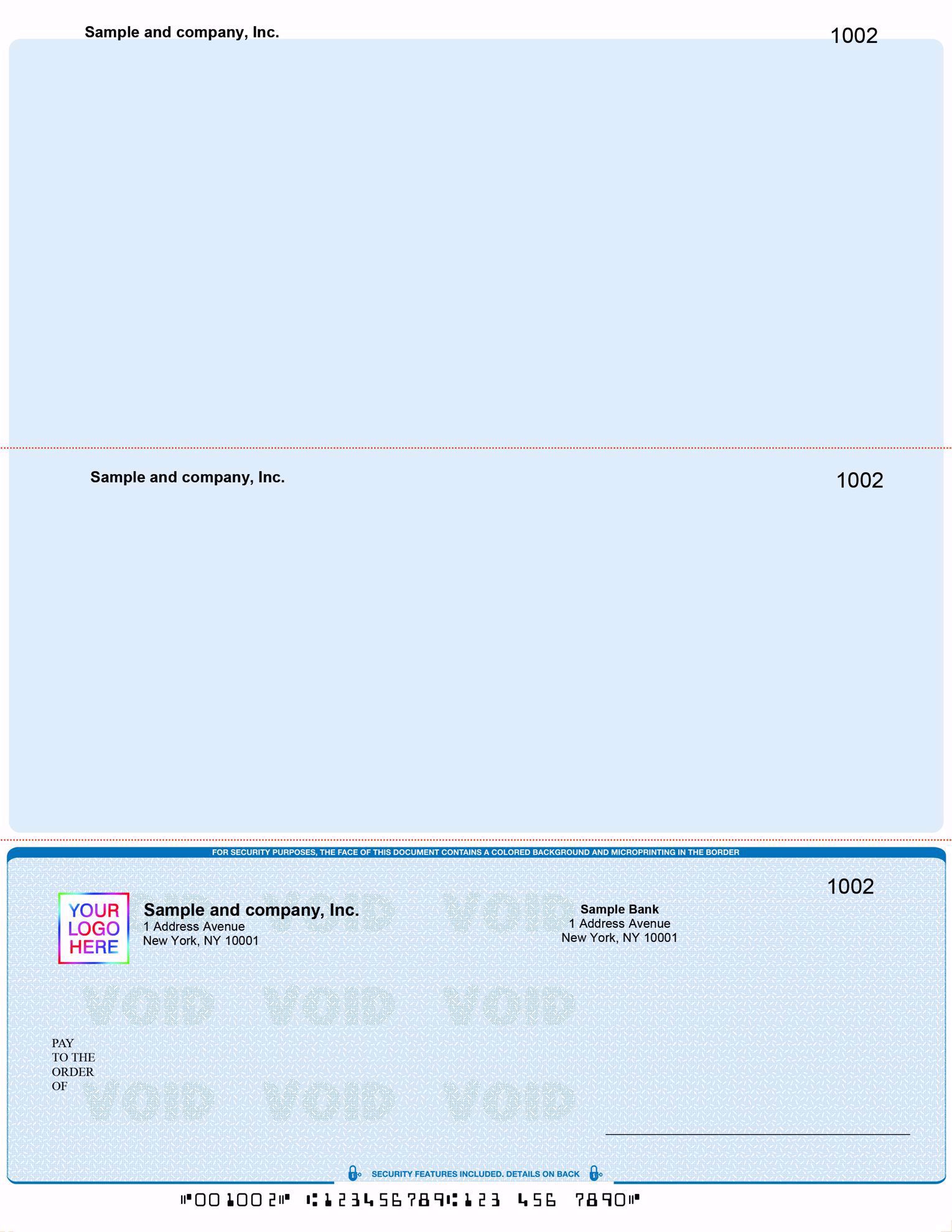
A check at the bottom leaves the most room for that detail. See check on bottom accounting software checks for the layout.
What should a franchise group keep on file?
The documents that prove the arithmetic rather than the documents that summarize it. In a group running several units, the file that matters is the one a unit manager can produce without calling head office.
- The signed tip credit notice for every tipped employee, dated at hire.
- The written tip pool arrangement, naming the roles included.
- Tip reports by employee and period, matching what went on the stub.
- Service charge distribution records, kept apart from tip records.
- The check number range issued to that unit, with voided items accounted for.
Separate the two money trails on paper, not just in the ledger. When service charge money and tip money sit in one spreadsheet, the overtime calculation is the first thing to go wrong, and it goes wrong quietly for months.
What happens when an employee works across two units?
Treat the workweek as one week for that employer, not as two part weeks. Hours worked at both units are added together for the week, and the pay record needs to show which unit the hours came from, since the per unit reconciliation still has to balance afterwards.
That is easier when the payment comes from one payroll account with a unit coded number series. The alternative, two separate checks for one workweek, makes both the overtime position and the employee conversation harder than they need to be.
Related reading
- Check register covers reconciling by unit and by series.
- Check signing policy covers approval at unit level.
- High security business checks covers stock held across several sites.
- Blank check security features covers what each printed feature does.
What to do next
Pull one tipped employee's stub from last period and try to reconstruct the week from it. If you cannot see the cash wage, the credit and the tips as separate figures, the stub is the thing to fix before anything else.
Then get the stock right for the number of units you run. Business checks are printed to your layout and numbering, and three on a page accounting software checks suit a high volume run.
About the Author
Restaurant groups are among the heaviest users of check stock we print, and the reason is turnover. New starters want to see a payment in their hand, and the stub is the first document that explains how their pay works.
The tip credit, service charge and pooling points here follow federal wage and hour guidance on tipped employees. State law often sets a higher standard, so your state labor office governs what applies to your units.
Last updated: November 5, 2026
Small payments cause trouble out of all proportion to their size. The amount is never the problem. The problem is that the fastest way to pay leaves the thinnest record, and nobody notices until someone asks for the file.
Quick Summary
A petty cash fund is a small float used for minor purchases and topped back up to the same figure. It works where the records keep pace with it. Federal guidance expects supporting documents that identify the payee and amount, show proof of payment, and record the date and a description, and a till receipt alone often does not do all of that.
- Five elements make a record: payee, amount, proof of payment, date, description.
- One document is often not enough. Guidance says a combination may be needed.
- Keep the float small, a week or two of genuine small spending.
- Name one custodian who does not approve or post the entries.
- Reconcile on a schedule, cash plus vouchers equals the float.
- Write a check instead once a payment is repeating, larger, or to a business.
The table below shows where each method is the easier one to defend later.
| Situation | Easier method | Why |
|---|---|---|
| Stamps, milk, a bus fare | Petty cash | A check costs more effort than the purchase |
| A one off trade purchase | Check | Names the payee and proves payment by itself |
| A monthly repeating cost | Check | Belongs in the ledger, not in a tin |
| Reimbursing an employee | Either, with a voucher | The voucher carries the description and approval |
This page is general information about expense records. It is not tax or accounting advice, and what your business must keep depends on your filings, so treat your accountant as the authority.
Where the answer is a check, business checks can be printed with a stub that records what the payment was for, which is the description element you need anyway.
What this guide covers
- What is a petty cash fund?
- What records does a small payment need?
- How large should the float be?
- Who should hold the cash?
- How do you reconcile it?
- When is a check the simpler answer?
- What should a petty cash voucher capture?
What is a petty cash fund?
A petty cash fund is a fixed float of cash kept on site for minor purchases, replenished back to the same figure each time it is topped up. That fixed figure is the point. At any moment, the cash in the box plus the vouchers in the box should equal the float, so the balance checks itself.
The arrangement is often called an imprest system, and the name is worth knowing because it describes the discipline rather than the box. The float is fixed, the top up equals what was spent, and the total never moves.
Everything that goes wrong with petty cash is a departure from that one rule. A float that drifts, a voucher that was never written, a note borrowed and replaced on Monday, and the self checking property is gone.
What belongs in it and what does not?
- Belongs: small incidental purchases made in person, where no account exists.
- Belongs: small reimbursements to staff, with an approved voucher.
- Does not belong: anything repeating monthly, which should be a supplier account.
- Does not belong: wages, advances or loans of any kind.
- Does not belong: payments to a business that will issue an invoice.
What records does a small payment need?
The same elements a large one needs. Federal guidance on business records says supporting documents should identify the payee and the amount paid and show proof of payment, and should include the date incurred and a description showing the item or service was a business cost.
One line in that guidance is the one most small businesses miss: a combination of supporting documents may be needed to substantiate all elements of a purchase. A single scrap of paper is often not the record, it is one part of it.
What counts as a supporting document?
The guidance lists canceled checks or other documents reflecting proof of payment, cash register tape receipts, credit card receipts and statements, and invoices. For expenses it adds account statements to that list.
Notice where the cash purchase is weakest. A till receipt proves what was bought and what it cost, and says nothing about who paid. A check supplies the payee and proof of payment in one document.
Keeping the written items and their stubs in one place is half the discipline. See check book binders for that format.
How large should the float be?
Enough for a normal week or two of genuine small purchases, and not a penny more. The right size is a question about frequency rather than about value, so count how often the box is opened before deciding what to put in it.
- List a month of real small purchases from your records, not from memory.
- Remove anything that should be on account, which is usually most of it.
- Set the float at what remains for a week or two.
- Set a maximum per payment, above which a check is required.
- Review the float twice a year, because habits drift.
A large float hides problems for longer. That is the real argument for keeping it small, rather than any worry about the money itself.
Who should hold the cash?
One named person, who does not also approve reimbursements or post the entries. The separation matters more in a small business than a large one, because in a small business the same person often does all three without anyone deciding that they should.
- Name the custodian in writing, and name a deputy for holidays.
- Keep the box locked and the key with that person, not in the drawer.
- Require an approved voucher before cash leaves the box.
- Have someone else count it at each replenishment.
Our guide to check signing policy covers the same separation on the payments side, and the thinking behind both is identical.
How do you reconcile it?
Count the cash, total the vouchers, and confirm the two together equal the float. Anything else is a difference, and a difference is investigated while people still remember the week rather than at year end.
- Count the cash in front of a second person.
- Total the vouchers and attached receipts for the period.
- Add the two figures and compare with the float.
- Record the result either way, including a nil difference.
- Replenish by check back to the float, which puts the top up in your register.
Keep the reconciliation sheet itself. It is a short page, it takes two minutes, and it is the document that shows a reviewer the fund was being watched rather than simply refilled whenever it ran low.
That last step is worth doing even in a business that otherwise pays electronically. A check written to replenish the fund gives the top up a number, a date and a stub, and a check register then carries the history.
When is a check the simpler answer?
Sooner than most businesses think. The moment a payment has a named business payee, an invoice, or a habit of repeating, cash stops being the quick option and starts being the one that needs extra paperwork to explain.
- The payee is a business rather than a counter.
- The purchase repeats weekly or monthly.
- The amount is beyond your per payment cash limit.
- You need the payee name on the record, not just the shop name.
- Someone else will need to understand it months later.

See blank checks on the bottom for stock that leaves room above the check for the description.
What should a petty cash voucher capture?
The elements the receipt leaves out. A voucher is a small internal form, and its job is to turn a loose till receipt into a record that identifies the payer, the purpose and the approval.
| Field | Why it is needed |
|---|---|
| Sequential voucher number | Makes a missing voucher visible as a gap |
| Date incurred | One of the elements guidance expects |
| Payee or supplier | Identifies who received the money |
| Business purpose | Shows the item or service was a business cost |
| Amount and who was repaid | Links the cash out to a person |
| Approval signature | Separates spending from authorizing |
Staple the receipt to the voucher immediately. A receipt that travels separately for even a day usually arrives without anyone remembering what it was for, and that memory is the description element.
What about a purchase with no receipt at all?
Write the voucher anyway, record what was bought and why, and have it approved by someone other than the person who spent the money. A documented exception is a far better position than a silent one, and if the exceptions become routine the answer is to move that spending onto an account.
Related reading
- Check register covers the running record of every payment.
- Check signing policy covers approval limits and separation of duties.
- How to write a business check by hand covers filling one in correctly.
- Blank check security features covers what the printed features do.
What to do next
Open the box this week, count it, and total the vouchers. If the two do not equal the float, you have found the thing worth fixing, and if they do, you have a baseline to replenish from.
Then move the repeating items off cash. Business checks are printed with a stub that records what each payment was for, and check book binders keep the written record in one place.
About the Author
Plenty of our customers order a small book of checks purely to stop using cash for things that should never have been cash. The usual trigger is an accountant asking who a payment went to, and nobody in the building being able to say.
The record requirements here follow federal guidance on the records a small business should keep. Retention periods and what your filings require are questions for your accountant.
Last updated: November 5, 2026
A remittance advice is the least interesting document in accounts payable, right up to the moment a sentence on one settles a balance you were still arguing about.
Quick Summary
A remittance advice tells the payee which invoices your payment covers. Keep it factual and complete, make sure it survives the separation between the check and the paperwork, and be deliberate about any wording that describes the payment as settling a disputed claim, because the Uniform Commercial Code gives that wording real effect.
- List invoice numbers and the amount applied to each one.
- Show deductions as their own lines, with a reason and a reference.
- Put short lists on the stub, long lists on a separate sheet or email.
- A full satisfaction statement can discharge a disputed claim where the conditions in the code are met.
- An organization can designate an address for disputed debt communications in advance.
- Repayment within 90 days is the route back for a claimant who banked such an item.
Here is what each part of the document is doing, and what goes wrong when it is missing.
| Element | Why it is there | What happens without it |
|---|---|---|
| Invoice numbers | Lets the payee apply the money | Applied to the oldest balance instead |
| Amount per invoice | Splits a combined payment | Part paid invoices look unpaid |
| Deduction lines | Explains a short payment | Treated as a dispute or an error |
| Payment reference | Ties the note to the item | Nobody can match them later |
This page is general information about payment paperwork. It is not legal or accounting advice, and your state's enactment of the commercial code and your own contracts govern your position, so treat your counsel and your accountant as the authority.
On the document side, business checks can be printed with a stub deep enough to carry a real invoice list rather than a single reference.
What this guide covers
- What is a remittance advice?
- What should a remittance advice include?
- Where should the detail travel?
- Can a note on a payment settle a dispute?
- How does a business protect itself?
- How do you handle short payments?
- What does a simple remittance advice look like?
What is a remittance advice?
A remittance advice is the note that travels with a payment to explain what the money covers. It is not a receipt, it is not an invoice, and it creates no obligation by itself. Its whole purpose is to let the person receiving the money apply it to the right accounts without calling you.
No general rule forces you to send one. Businesses send them because an unexplained payment costs both sides time, and because an unexplained payment is usually applied to the oldest open balance rather than the one you intended to clear.
Who actually reads it?
The payee's cash allocation clerk, not the salesperson you deal with. Writing it for that person, in the format their ledger expects, is what gets the payment applied correctly on the first attempt.
What should a remittance advice include?
Six things, and nothing that could be mistaken for a legal position you did not intend to take.
- Your business name exactly as the payee holds it, which may not be your trading name.
- The payment date, method and reference, such as the check number.
- Each invoice number with the amount applied against it.
- Credit notes and deductions on separate lines, each with a reason.
- The total, matching the amount of the payment to the cent.
- A contact for queries, so a question reaches a person rather than a mailbox.
Keep the narrative out of it. Explanations of why a payment is late, or how you feel about an invoice, belong in an email rather than on a document that travels with money.
A check at the top leaves two stub areas below it. See check on top accounting software checks for that layout.
Where should the detail travel?
Wherever it will still be readable after the check and the paperwork go in different directions. That separation is the practical problem, because the item itself goes to a bank and the note goes to a desk.
- Short lists belong on the stub, printed at the same time as the payment.
- Long lists belong on a separate sheet, folded in the same envelope.
- Email a copy the same day where the payee has an accounts address.
- Keep your own copy with the check number against it.
Our guide to the check register covers the copy you keep, which is the version that matters when a payee says a payment never arrived.
Can a note on a payment settle a dispute?
Yes, and this is the part most guides to remittance advice leave out. The Uniform Commercial Code recognizes accord and satisfaction by use of an instrument, which means a payment plus the right wording can discharge a claim the parties were arguing about.
The person relying on it has to prove three things: that they in good faith tendered an instrument to the claimant as full satisfaction of the claim, that the amount of the claim was unliquidated or subject to a bona fide dispute, and that the claimant obtained payment of the instrument.
What does the wording have to look like?
The code asks for a conspicuous statement to the effect that the instrument was tendered as full satisfaction of the claim, and it allows that statement to sit either on the instrument itself or on an accompanying written communication. A remittance advice is an accompanying written communication.
That is why the wording on these notes matters. A phrase added casually to explain a short payment is capable of being read as a tender in full satisfaction, and banking the check is what completes it.
How does a business protect itself?
By deciding in advance where disputed debt communications have to go. The code lets an organization claimant defeat the statement rule by proving it sent, within a reasonable time before the tender, a conspicuous statement that communications concerning disputed debts are to be sent to a designated person, office or place, and that the instrument or communication was not received there.
- Name the designated place in your standard terms and on your invoices.
- Make the statement conspicuous, not a footnote in small type.
- Send it before any dispute arises, since the timing requirement is a reasonable time before the tender.
- Train the cash allocation desk to flag any item mentioning full satisfaction.
- Keep the envelope and the note, because where the item arrived is the question.
What if the check is already banked?
There is a route back, with a deadline. The code allows a claimant to prove that within 90 days after payment of the instrument it tendered repayment of the amount of the instrument to the person against whom the claim is asserted. That route is not available to an organization that relied on the designated address statement.
One more exception runs the other way. Where the person who paid proves that, within a reasonable time before collection was initiated, the claimant or an agent with direct responsibility for the disputed obligation knew the instrument was tendered in full satisfaction, the claim is discharged anyway.
How do you handle short payments?
Show the arithmetic and avoid the conclusion. A deduction that is explained as a line item is routine. The same deduction described as settling the account in full is a different document with a different effect.
- Show the invoice at full value before any deduction.
- Give each deduction a reason code and a reference number.
- State the net paid and nothing about what remains owed.
- Raise genuine disputes separately, in writing, before the payment run.
Where payments are written by hand, the stub is the remittance advice. See compact three per page manual business checks for that format.
What does a simple remittance advice look like?
Like a short table with a total underneath. The layout below is the one most accounts teams can process without a single question, and it fits on a stub when the list is short.
| Line | What goes in it | Common mistake |
|---|---|---|
| Header | Your registered name, date, check number | Using a trading name the payee has never seen |
| Invoice rows | One row per invoice, with the amount applied | Grouping several invoices into one figure |
| Adjustment rows | Credit note or deduction, reason, reference | Netting the deduction into the invoice row |
| Total | The exact amount of the payment | A total that does not tie to the check |
| Footer | Name and contact for queries | Wording that describes the payment as final |
Build it once and reuse it. A template that your software fills from the payment run removes the improvised sentence, which is where the risk in this document sits.
Related reading
- Check register covers the copy you keep of every payment.
- Check signing policy covers who approves a payment before it goes out.
- How long is a business check good for covers stale items and reissue.
- Check washing covers protecting the payment in the mail.
What to do next
Read the last remittance note your business sent and the last one it received. Check both for any sentence describing a payment as full or final settlement, then decide whether your invoices tell the other side where disputed debt communications have to go.
Then make the stub do its job. Business checks are printed with the stub depth you specify, and compact three per page manual business checks suit payments written away from a printer.
About the Author
We print the stubs that most remittance advice actually lives on. The commonest request we get from accounts payable teams is more lines, because a payment that settles eleven invoices on a stub built for four turns into a phone call at the other end.
The accord and satisfaction points here follow the Uniform Commercial Code article on negotiable instruments. Your state's enactment governs, and a live dispute is a question for your counsel rather than an article.
Last updated: November 4, 2026
Somewhere in most long established offices there is a heavy metal device that crushes the amount into a check. It looks obsolete. The legal reason it was bought has not changed at all.
Quick Summary
A check protector machine makes the amount field hard to change. That matters because the Uniform Commercial Code precludes a drawer whose failure to exercise ordinary care substantially contributed to an alteration from asserting it against a good faith payor. The device answers one small part of that duty, and leaves the rest of the document untouched.
- It locks the amount only, by pressing ink into shredded paper fibers.
- Ordinary care is the legal test, and failing it can preclude your claim entirely.
- Loss can be split where the other party was careless too.
- An altered item is still enforceable according to its original terms.
- Later items by the same wrongdoer carry a period not exceeding thirty days to report.
- One year is the outer limit, after which the customer is precluded regardless of care.
Here is what the device covers against the parts of a check that fraud actually targets.
| Part of the check | Protector helps | What else is needed |
|---|---|---|
| Amount in figures and words | Yes, this is its whole job | Nothing, if used on every item |
| Payee name | No | Full registered name, tamper resistant stock |
| Signature | No | Signing policy and limits, secure storage |
| The item in transit | No | Sealed envelopes, prompt statement review |
This page is general information about payment documents and record keeping. It is not legal or banking advice, and your account agreement and your state's enactment of the commercial code govern your position, so treat your bank and your counsel as the authority.
Where checks are handwritten, the stock does part of the work. Blank checks three per page suit a manual run, and blank check security features explains what each printed feature is for.
What this guide covers
- What does a check protector machine do?
- Why does locking the amount matter legally?
- What is an altered check worth?
- How quickly do you have to report?
- How do you write a check so the amount cannot be changed?
- What does a protector not protect?
- Do you still need one?
What does a check protector machine do?
A check protector machine prints the amount into the paper rather than onto its surface. It presses inked characters hard enough to shred the fibers and drive pigment into them, so the figures cannot be lifted with solvent or overwritten without obvious damage.
That is the entire function. It is not a signing device, it does not certify anything, and a check it has processed is not more valid than one written with a pen. The device only makes one field hard to change.
Where is it still genuinely useful?
- Checks written away from the office, on site or at a counter.
- Occasional manual items in a business that otherwise prints from software.
- Larger one off payments where the amount is the attractive target.
- Handwritten books kept by a supervisor or a site manager.
Why does locking the amount matter legally?
Because carelessness can cost you the right to complain. The Uniform Commercial Code says a person whose failure to exercise ordinary care substantially contributes to an alteration is precluded from asserting that alteration against a person who, in good faith, pays the instrument.
Read that slowly, because it is the opposite of how most businesses assume the risk sits. The question is not only whether someone altered your check. It is also whether your own practices helped them.
Is the loss all or nothing?
No, and that is the part worth knowing. Where the party asserting the preclusion also failed to exercise ordinary care, and that failure substantially contributed to the loss, the code allocates the loss between the two according to the extent each failure contributed.
Proof follows the same shape. The party asserting preclusion has to prove the other side's failure to exercise ordinary care, and the person precluded has to prove the asserting party's failure where comparative fault is raised.
Manual writing is where ordinary care is most visible. See blank checks three per page for the format most hand written runs use.
What is an altered check worth?
Its original terms. The code defines alteration as an unauthorized change that purports to modify in any respect the obligation of a party, or an unauthorized addition of words or numbers to an incomplete instrument relating to that obligation.
What follows is the useful part. A payor bank or drawee that pays a fraudulently altered instrument, or a person who takes it for value in good faith and without notice of the alteration, may enforce it according to its original terms. Where an incomplete instrument was altered by unauthorized completion, it may be enforced according to its terms as completed.
That second limb is the argument for never signing a blank check. An incomplete item filled in without authority can be enforced as completed, which is a far worse position than the original terms.
How quickly do you have to report?
Promptly, and there are two deadlines behind that word. The code requires a customer to exercise reasonable promptness in examining the statement or the items, and to promptly notify the bank of the relevant facts once an unauthorized payment is apparent.
- Review statements on a schedule, not when something feels wrong.
- Report the first altered item immediately, in writing as well as by phone.
- Review the whole period at once, because later items by the same wrongdoer carry a period not exceeding thirty days to examine and notify.
- Treat one year as the hard stop. A customer who misses it is precluded regardless of care, counted from when the statement or items were made available.
- Keep the dates you reviewed, since reasonable promptness is a question of evidence.
Our guide to the check register covers the record that makes a review provable, which is exactly what these deadlines turn on.
How do you write a check so the amount cannot be changed?
By leaving no room for a change and no doubt about what was written. These habits cost nothing and they are the practical content of ordinary care on a handwritten item.
- Start both amount fields hard left, so nothing can be added in front of the figures.
- Draw a line through the space that remains after the written words.
- Write the cents clearly, as a fraction over one hundred rather than a casual dash.
- Use permanent dark ink, never pencil and never a pen that erases.
- Keep the stub in the same hand at the same moment, not later from memory.
- Never sign an item before the amount is filled in, because an incomplete instrument can be enforced as completed.
A bank verification service covers the other half of the problem. Where your bank offers one, you send the issued check numbers and amounts, and items that do not match are flagged before they are paid rather than argued about afterwards.
That pairing is the modern version of the device. One control makes the amount hard to change, the other makes a changed amount hard to pay.
What does a protector not protect?
Everything except the amount. A locked figure is no help at all against the three attacks that are more common than amount raising.
- A wrong or altered payee, which needs the full registered name and secure stock.
- A forged or stamped signature, which needs a signing policy and locked storage.
- An item stolen in the mail, which needs sealed envelopes and prompt review.
- A payment sent to a changed address, which needs a verification call.
Our guides to check washing and check signing policy cover the first three, and high security business checks covers stock built to resist alteration across the whole document.
Do you still need one?
If you write checks by hand, the device still earns its place. If your payments are printed from accounting software onto tamper resistant stock and verified by your bank, the amount field is already protected and a protector adds little.
The test is not whether the machine is modern. It is whether you can describe, in one sentence, how the amount on a handwritten check from your office cannot be changed. If you cannot, something has to fill that gap.
Printing the amount removes the handwritten field entirely. See business checks on the top for the layout most software expects.
Related reading
- Check washing covers solvent attacks and mailed items.
- Blank check security features covers what each printed feature does.
- High security business checks covers stock for larger payments.
- Check register covers the review record the deadlines depend on.
What to do next
Count how many checks your business wrote by hand last quarter. If the answer is more than a handful, decide this week whether the amount on those items is protected by a device, by printing, or by nothing at all.
Then match the stock to the answer. Business checks are printed to the layout your software uses, and high security business checks carry alteration resistant features across the whole document.
About the Author
Our presses supply check stock to businesses that still write items by hand, and to businesses that stopped years ago. Both call us for the same reason. Someone has looked at an old payment, seen a figure that does not match the stub, and started asking what the paper itself was supposed to prevent.
The alteration, ordinary care and reporting points here follow the Uniform Commercial Code articles on negotiable instruments and on bank deposits and collections. Your state's enactment and your account agreement govern your own position.
Last updated: November 4, 2026
Most comparisons of these two payment methods argue about speed. Speed is the easy part. The difference that decides real payments is what happens on the morning you discover the payment was wrong.
Quick Summary
A check stays under your control until the bank pays it, and you can stop payment for six months. A wire is a payment order that cannot be canceled or amended once the receiving bank has accepted it, unless that bank agrees. That asymmetry, not speed, is the reason to pick one over the other.
- Stop payment lasts six months under the Uniform Commercial Code.
- An oral stop lapses in 14 calendar days unless confirmed in a record.
- You carry the burden of proving loss if a stopped item gets paid anyway.
- An accepted wire needs the receiving bank's agreement before it can be canceled.
- Wired funds are available next business day after the bank receives the payment.
- Only a check stub carries invoice detail that travels with the payment.
Side by side, the two methods differ on four things that matter to a finance team.
| Factor | Business check | Wire transfer |
|---|---|---|
| Can you pull it back | Stop payment while unpaid, effective six months | Not once accepted, unless the receiving bank agrees |
| Speed to the recipient | Mail plus deposit plus availability | Available next business day after receipt |
| Detail that travels | Stub listing invoices and references | Short reference field, often truncated |
| Paper trail | Numbered item, endorsement, image | Bank confirmation and reference number |
This page is general information about payment methods. It is not legal or banking advice, and your bank's agreement and your state's version of the commercial code govern your position, so treat your bank and your counsel as the authority.
If the detail that travels with a payment matters to you, business checks can be printed with a stub sized for the references your customers ask for.
What this guide covers
- What is the real difference between the two?
- Can you cancel a wire transfer?
- Can you stop payment on a check?
- When does the money become available?
- Which method suits which payment?
- What about remittance detail and records?
What is the real difference between the two?
Control over the payment after it leaves. A check is an instruction you can withdraw while the item is unpaid. A wire is a payment order designed to settle, and the rules that govern it are built around finality rather than second thoughts.
That design difference is deliberate. A funds transfer system has to be able to treat a settled payment as settled, otherwise no recipient could rely on money arriving. The cost of that reliability falls on the sender.
Why does finality matter in practice?
Because the error you need protection against is almost never the bank's. It is a wrong account number, a duplicate payment, a disputed delivery, or an instruction that came from someone impersonating a supplier. All four are recoverable on a check that has not yet been paid.
Can you cancel a wire transfer?
Only in narrow circumstances, and mostly before acceptance. The funds transfer article of the Uniform Commercial Code says that once an order has been accepted, cancellation or amendment of the order is not effective unless the receiving bank agrees, though a funds transfer system rule may also permit it.
What if you catch it quickly?
Timing is the whole question. The same article makes a cancellation or amendment effective if notice is received at a time and in a manner affording the receiving bank a reasonable opportunity to act before it accepts the order. In practice that is a very short window.
- Call the bank first, because the clock is running against acceptance.
- Expect a security procedure, since a communication is not effective unless verified under it or agreed by the bank.
- Do not rely on an unaccepted order lapsing. An unaccepted order is canceled by operation of law at the close of the fifth funds transfer business day, which is far too slow to help.
- Ask the bank to contact the receiving institution, which is a request rather than a right.
Plan on recovery being a negotiation. A wire sent to the wrong party is recovered by cooperation and goodwill, not by a form.
Can you stop payment on a check?
Yes, while the item is unpaid. The Uniform Commercial Code says a customer may stop payment of any item drawn on the customer's account or close the account, as long as the order reaches the bank in a way that gives it a chance to act before it pays the item.
Two numbers in that section decide how useful the right is. A stop payment order is effective for six months. An oral order lapses after 14 calendar days if it was not confirmed in a record within that period.

Numbered stock is what makes a stop payment request precise. See blank checks on the middle for that layout.
What do you have to prove?
Your loss, if the bank pays the item anyway. The same section puts the burden of establishing the fact and amount of loss on the customer, which turns your own records into the evidence.
- Confirm the stop in writing the same day you call.
- Record the reference number the bank gives you.
- Note the check number, amount and payee exactly as issued.
- Keep the invoice or reason that made you stop it.
- Diary the six month expiry so a long running dispute does not outlive the order.
Our guide to the check register covers where those details belong, and check signing policy covers who may authorize a stop in the first place.
When does the money become available?
For an electronic payment, federal availability rules require a bank to make the funds available for withdrawal no later than the business day after the banking day on which it received the payment. That sounds immediate, and the definition of received is what makes it less so.
The rule says an electronic payment is received when the receiving bank has both payment in actually and finally collected funds and information on the account and amount to be credited. Missing or mismatched account information delays the credit even where the money has arrived.
Do any checks get the same treatment?
Some do. The same availability rules give next day availability to listed categories, including Treasury checks, Postal Service money orders, Federal Reserve and Federal Home Loan Bank checks, certain state and local government checks, cashier's, certified and teller's checks, same bank branch checks and a limited amount per banking day.
The ordinary business check is not on that list, and several of those categories move to the second business day when the deposit is not made in person.
Which method suits which payment?
Choose by how much you would mind being unable to reverse the payment. That single question sorts almost every case a finance team meets.
| Payment | Usual choice | Why |
|---|---|---|
| Routine supplier invoices | Check | Reversible while unpaid and carries invoice detail |
| A closing or title payment | Wire | Deadline is immovable and the counterparty is known |
| First payment to a new vendor | Check | Keeps a route back if the details prove wrong |
| Release of goods held at a port | Wire | Settlement has to be provable within the day |
| Disputed or part accepted work | Check | Leaves the stop payment right intact |
Those are defaults rather than rules. A supplier who will only release stock against same day funds has settled the question for you.
What about remittance detail and records?
This is where the humble stub still wins. A check can carry a list of the invoices a payment settles, printed in a space the recipient's accounts team actually reads, while a wire usually carries a short reference field that gets truncated somewhere along the route.
- Send remittance detail separately for wires, by email on the same day.
- Keep the bank confirmation reference against the invoice in your ledger.
- Seal check stubs out of view because they show payment detail.
- Reconcile both methods the same week, not at month end.

See double window envelopes for the format that shows the addresses and nothing else.
Related reading
- Check register covers recording stops, voids and reissues.
- How long is a business check good for covers stale dating.
- High security business checks covers stock for larger payments.
- Check washing covers protecting a mailed payment.
What to do next
Write down which payments your business sends by wire and ask one question of each: would we accept this money being unrecoverable. Anything that fails that test belongs on a reversible instrument until the counterparty is beyond doubt.
Then make sure the reversible option is set up properly. Business checks are printed to your layout and numbering, and high security business checks add tamper resistance where amounts are large.
About the Author
We print check stock for American businesses that still want a route back when a payment goes wrong. Customers who have lost a wire tend to order the next batch with a wider stub and a second signature line, which tells you what the experience teaches.
The cancellation points here follow the funds transfer article of the Uniform Commercial Code, the stop payment points follow its article on bank deposits and collections, and the availability points follow the federal funds availability regulation. Your bank's agreement and your state's enactment govern your own position.